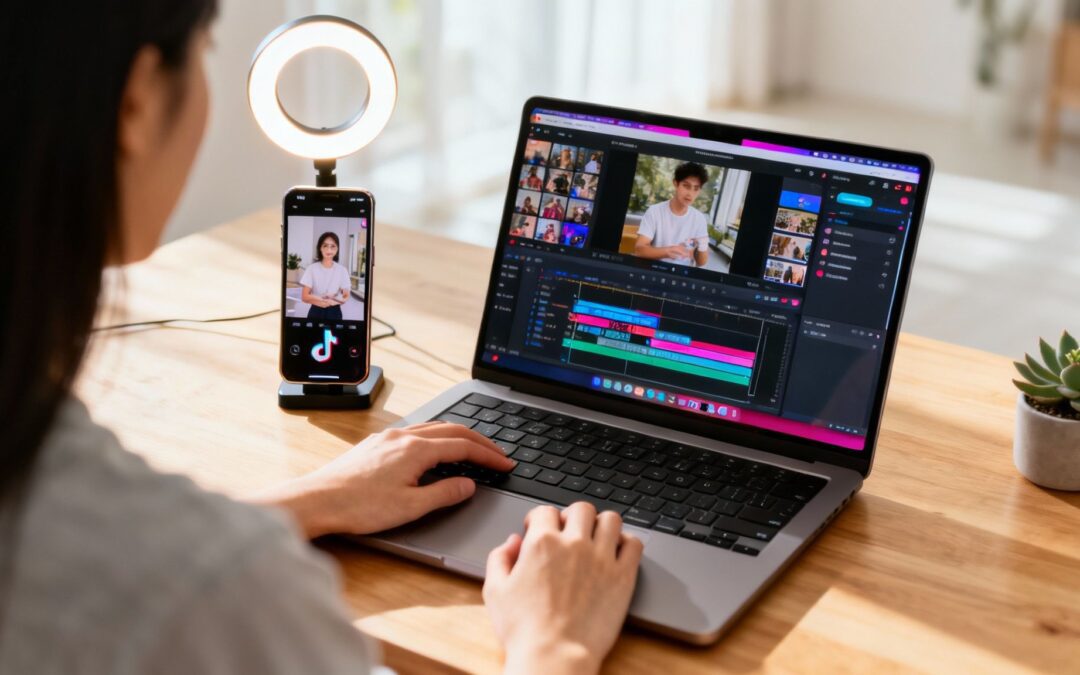
To create video for social media that actually connects, you have to think beyond just posting random clips. It’s all about crafting content that tells a compelling story and builds a real relationship with your audience. This is where you move from just adding to the internet’s noise to truly captivating the people you want to reach.
Why Video Is Your Social Media Superpower

It’s no secret that video has become the main language of social media. But why is it so effective? The magic is in its ability to blend visuals, sound, and motion to trigger emotions and explain complex ideas in seconds. Static images and plain text just can’t keep up.
This dynamic format doesn’t just get attention; it keeps it. Social platforms are built to push engaging content, and video consistently crushes other formats in driving interactions like likes, shares, and comments. This creates a powerful feedback loop: great video gets more visibility, which in turn builds a more loyal following.
The Undeniable Data Behind Video’s Success
The numbers don’t lie. Video content is now the driving force in social media marketing. A staggering 89% of B2B marketers are sharing videos on social platforms. And in the United States alone, YouTube is expected to pull in around 211 million viewers in 2024, making it an absolute beast for reach.
To give you a clearer picture, here’s a quick look at why video is so essential today.
Key Social Media Video Statistics
This table breaks down some of the most compelling stats that show just how powerful video has become for anyone creating content online.
| Platform/Metric | Key Statistic | Implication for Creators |
|---|---|---|
| B2B Marketers | 89% use social media for video distribution. | If you’re in B2B, video is no longer optional; it’s a core part of the playbook. |
| YouTube US Viewership | ~211 million viewers in 2024. | The audience is massive. You have an incredible opportunity to reach a huge, engaged user base. |
| Social Media Users | 92% of users watch videos with the sound off. | Design for sound-off viewing. Use clear captions and strong visuals to carry your message. |
| Viewer Retention | The first 3 seconds are critical for grabbing attention. | Your hook needs to be immediate and powerful. Don’t save the best for last. |
These numbers aren’t just trivia; they’re a roadmap. They show us that video is where your audience is, but you have to be smart about how you create it to make a real impact.
For brands, video is the closest they can get to a face-to-face conversation with their audience at scale. It humanizes your message, making it more relatable and trustworthy than text alone.
Making Professional Video Accessible
Not too long ago, creating high-quality video meant shelling out for expensive gear and hiring technical pros. This put it out of reach for a lot of small businesses and solo creators. Thankfully, tools like Wideo have completely leveled the playing field, putting the power of professional video creation right at your fingertips. For a deeper dive, check out our guide on https://wideo.co/blog/why-use-video-for-marketing/.
With intuitive platforms, you no longer need a full-blown production studio to make polished, engaging videos. The game has shifted from technical know-how to creative storytelling. To really tap into this, it helps to explore proven social media video marketing strategies that actually work to make sure your hard work pays off.
This guide will walk you through exactly how to use Wideo to do just that, step by step.
Navigating the Wideo Platform with Confidence
Jumping into a new tool can sometimes feel a bit disorienting, but I’ve found Wideo is designed to be intuitive right out of the gate. Think of the dashboard as your creative command center—it’s where all your projects live and where your ideas start to take shape. It’s built to help you create video for social media without a massive learning curve.
When you first log in, you’re greeted with a clean, organized space. The main area shows your existing video projects, making it a breeze to pick up right where you left off. All the key navigation options are clearly labeled, guiding you whether you want to start a new video, browse templates, or just manage your account settings.
This is your main dashboard, the central hub for all your video creation.
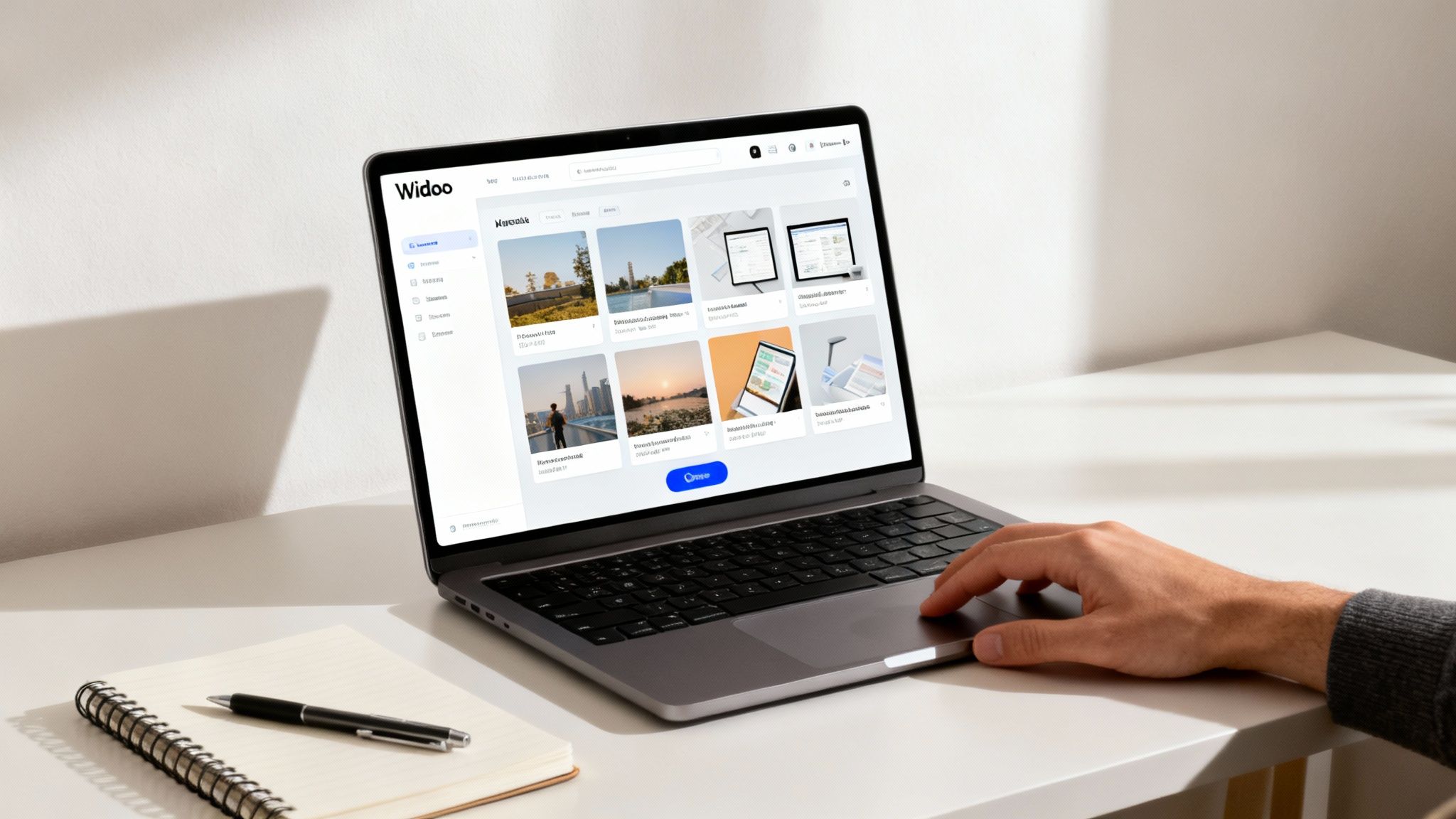
The whole interface really pushes for a user-friendly experience, with big, obvious buttons to start a new project from a template or from scratch. This direct access to the creation tools is exactly what helps you get going in just a few minutes.
Your First Steps Inside Wideo
Getting started is refreshingly simple. The platform walks you through the initial setup, so you’re ready to dive into your first project without any friction. There’s no complex configuration needed; you can keep your focus squarely on your creative vision.
Your first move will probably be to check out the template library. This isn’t just a collection of designs; it’s a genuine source of inspiration, neatly categorized by industry, use case, and social media platform. You’ll find templates already formatted for Instagram Stories, Facebook feed posts, or even those polished LinkedIn updates.
Next, get a feel for the project organization system. You can create folders to keep your work tidy—something I’ve found is a lifesaver when you’re juggling multiple campaigns or client projects. A well-organized workspace saves a ton of time and prevents headaches as your video library grows.
Key Features of the Dashboard
As you settle in, you’ll notice a few core components that you’ll use constantly. Getting to know these from the start will make your workflow so much smoother.
- Template Gallery: This is the starting point for most projects. Use the search and filter functions to quickly pinpoint a design that fits your goal.
- “My Wideos” Section: All your saved projects are stored here. From this spot, you can edit, duplicate, or delete videos.
- Create New Button: It’s the prominent call-to-action that drops you right into the video editor, either with a blank canvas or your chosen template.
- Account Settings: Usually found in the top-right corner, this is where you’ll manage your subscription, billing info, and profile details.
The real power of Wideo is in its simplicity. It strips away the technical barriers that often intimidate new creators, letting you focus purely on your message and visual storytelling.
For anyone who wants a more detailed walkthrough of specific features or editing techniques, Wideo offers a goldmine of resources. You can explore a ton of helpful guides and video walkthroughs in their extensive tutorials section to master advanced skills at your own pace. I’d recommend bookmarking this page—it’s fantastic for when you get more comfortable and want to try out more complex animations and transitions in your videos.
Choosing and Customizing the Perfect Template
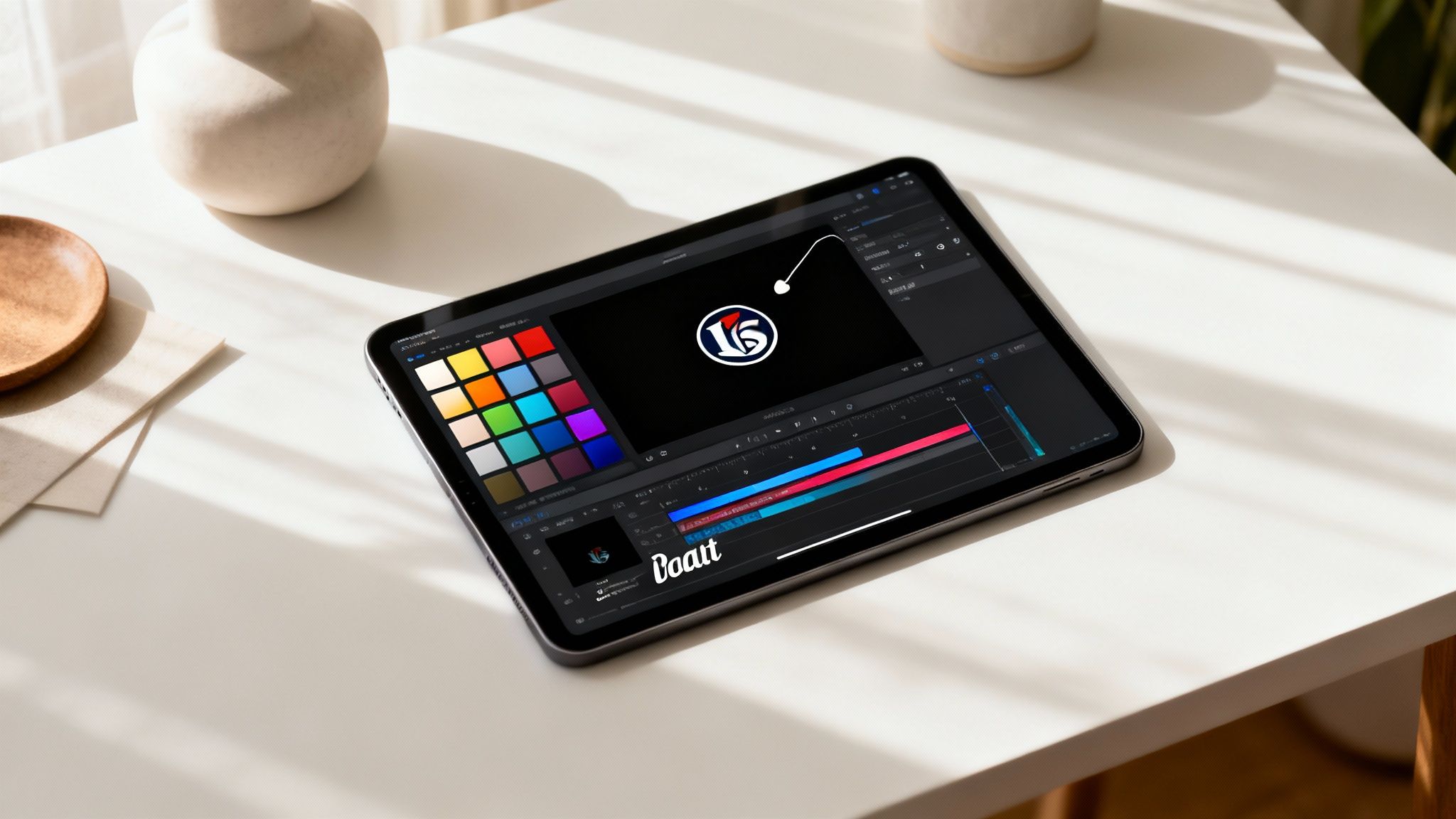
The secret to a great social media video often starts with a great template. Don’t think of it as a rigid box, but more like a creative launchpad. It’s a professionally designed starting point that saves you hours of work while making sure your final video looks sharp and polished. When you create video for social media, nailing the template choice is half the battle.
Wideo’s template library is where you’ll begin. Instead of getting lost scrolling through endless options, you can filter them down to exactly what you need. This is a huge time-saver and ensures the template aligns perfectly with your goals right from the get-go.
Finding Your Ideal Starting Point
With so many options, it’s easy to feel a bit overwhelmed. But a strategic approach makes it simple. Wideo lets you filter templates in ways that map directly to your campaign, which is a massive shortcut.
First, think about your objective. Are you launching a new product? Announcing a flash sale? Maybe you’re sharing a powerful customer testimonial? You’ll find templates specifically designed for these scenarios, each with a narrative structure built to deliver that exact message.
From there, you can narrow it down by industry. A template made for a tech startup is going to have a completely different vibe than one for a local coffee shop. Picking a template from your niche means the visual tone, color psychology, and even the pre-set animations will already be in the right ballpark for your audience.
Finally, consider where this video will live. The platform dictates the format.
- Vertical (9:16): This is non-negotiable for Instagram Stories, TikTok, and YouTube Shorts. A vertical template fills the entire mobile screen, creating a much more immersive experience.
- Square (1:1): The classic choice for Instagram and Facebook feeds. Square videos perform exceptionally well because they take up more screen real estate than landscape videos as people scroll.
- Landscape (16:9): Best for YouTube and for embedding on your website or in an email. This is the traditional video format everyone is familiar with.
Choosing the right format from the start saves you from awkward cropping or resizing headaches later on. It’s a simple step that makes a world of difference in how your video is received.
Making the Template Uniquely Yours
Once you’ve picked a template, the real fun begins. Customization is where you transform a great-looking design into a video that is unmistakably yours. This is all about infusing your brand’s personality into that pre-built framework.
Your first move should be swapping out placeholder media with your own brand assets. This means your product images, photos of your team, or even short video clips you’ve shot yourself. Wideo’s drag-and-drop editor makes this super easy—just upload your files and pop them into the scenes.
The goal here is to replace every generic element with something that screams your brand. This one simple action immediately elevates the video from a template to a custom piece of content.
Aligning the Visuals with Your Brand Identity
A consistent visual identity builds recognition and trust. Your videos should feel like they belong to the same family as your website, your logo, and your other marketing materials.
Adjusting the Color Palette
Most templates come with a default color scheme. Your next step is to tweak these to match your brand’s palette. Wideo lets you easily select objects and change their colors using specific hex codes, giving you precise control.
Pro Tip: Don’t just change the main colors. Pay close attention to the smaller details like accent colors, text colors, and background shades. A cohesive color scheme makes your video look incredibly professional and reinforces brand recall every single time someone watches.
Integrating Your Logo
Your logo is your brand’s signature. It needs to be present, but not distracting. A common best practice is to place your logo in a corner of the screen throughout the video or feature it prominently in the intro and outro scenes.
Think of it as a subtle watermark that adds professionalism and ensures viewers know who made the content, even if it gets shared all over the place. Wideo templates often have a dedicated spot for your logo, making this a simple drag-and-drop action.
Customizing Fonts and Text
The final piece of the branding puzzle is typography. While the template’s default font might look nice, using your brand’s specific fonts creates a seamless experience. If your brand uses a certain font on its website, using it in your video strengthens that visual connection instantly.
When it comes to the text itself, keep it concise and punchy. Remember, many people watch social media videos with the sound off. Your on-screen text needs to carry the story all on its own.
Here’s a quick checklist for your text:
- Swap the Font: Upload your brand’s font or pick a similar one from the library.
- Rewrite the Message: Replace the placeholder copy with your own compelling words.
- Check for Readability: Make sure the text size and color contrast make it easy to read on a small mobile screen.
By thoughtfully customizing these core elements—your assets, colors, logo, and fonts—you turn a template into a powerful, on-brand marketing tool. This ensures every video you create not only looks great but also works hard to build your brand.
Getting Creative with the Timeline
This is where your video really starts to come alive. A great template gives you the visual bones, but the timeline is where you inject personality and control the entire flow of your story. Getting comfortable with Wideo’s timeline is the secret to turning a few static scenes into a professional-looking video that people actually want to watch.
Think of the timeline as your director’s chair. It lays out every single element—your text, images, animations, and sound—and lets you decide exactly how they play out. You call the shots on when a headline fades in, how long a product shot stays on screen, and the precise moment the music hits its peak for maximum impact.
Controlling this is surprisingly simple. Every scene has a set duration that you can easily drag to shorten or extend. This is how you manage the pacing—you can speed things up for a high-energy promo or slow it right down for a more thoughtful, narrative-driven piece.
Fine-Tuning Your Video’s Pacing
Pacing is everything in video. Go too slow, and you’ll lose your audience. Go too fast, and they won’t know what hit them. The Wideo timeline gives you pinpoint control over the timing of individual objects, not just the whole scene.
You can click on any element—a logo, an icon, a call-to-action button—and dictate the exact second it appears and disappears. This is perfect for building suspense or revealing key points one by one instead of throwing everything on the screen at once. For example, you could have your main headline pop up first, followed a beat later by the supporting text. It’s a small touch that creates a much cleaner, more engaging viewing experience.
This is the kind of detail that separates amateur work from a polished, professional video. It’s all about guiding your viewer’s eye and delivering your message with intention.
Setting the Mood with Music and Sound
Audio is the unsung hero when you create video for social media. The right track can completely shift the tone and emotional weight of your content. Wideo has a built-in library of royalty-free music, which is a lifesaver for finding the perfect soundtrack without any copyright headaches.
You can filter tracks by genre, mood, or tempo to find something that matches your message.
- Upbeat and Energetic: Awesome for product launches or exciting announcements.
- Calm and Inspirational: Works perfectly for testimonials or brand stories.
- Corporate and Polished: A solid choice for professional presentations or LinkedIn videos.
Once you’ve picked a track, just drop it into your timeline. The real magic, though, is syncing your visuals to the beat of the music.
When you time your scene changes or key animations to hit right on a shift in the music, you create a seamless, high-end feel. It’s a subtle trick that makes your video feel incredibly cohesive and satisfying to watch.
A good audio track is non-negotiable. The connection between video quality and consumer trust is stronger than ever. In 2025, a massive 91% of consumers said that video quality directly impacts their trust in a brand. That’s a jump from 87% in 2024, showing that audiences have higher expectations than ever before. You can learn more about how video quality shapes brand perception in the latest video marketing statistics.
Adding a Little Punch with Sound Effects
Beyond music, sound effects are your secret weapon for making specific moments pop. These are short, snappy audio clips that can make your video more dynamic and grab your viewer’s attention.
Think about how you could use them:
- Highlighting a Call-to-Action: A subtle “click” or “swoosh” as your “Shop Now” button appears can subconsciously draw the eye right to it.
- Emphasizing a Key Statistic: A little “ding” or “pop” when an important number flashes on screen helps make that data point stick.
- Creating a Fun Transition: A simple “whoosh” when you switch between scenes can make the whole video feel smoother and more connected.
Wideo’s library has plenty of sound effects you can drag and drop right onto the timeline. You can place them at the exact millisecond they need to happen. Used sparingly, they add a layer of polish that makes your video stand out in a busy feed. It’s these small details that show your audience you’ve put real thought into their viewing experience.
Optimizing Your Video for Each Social Platform
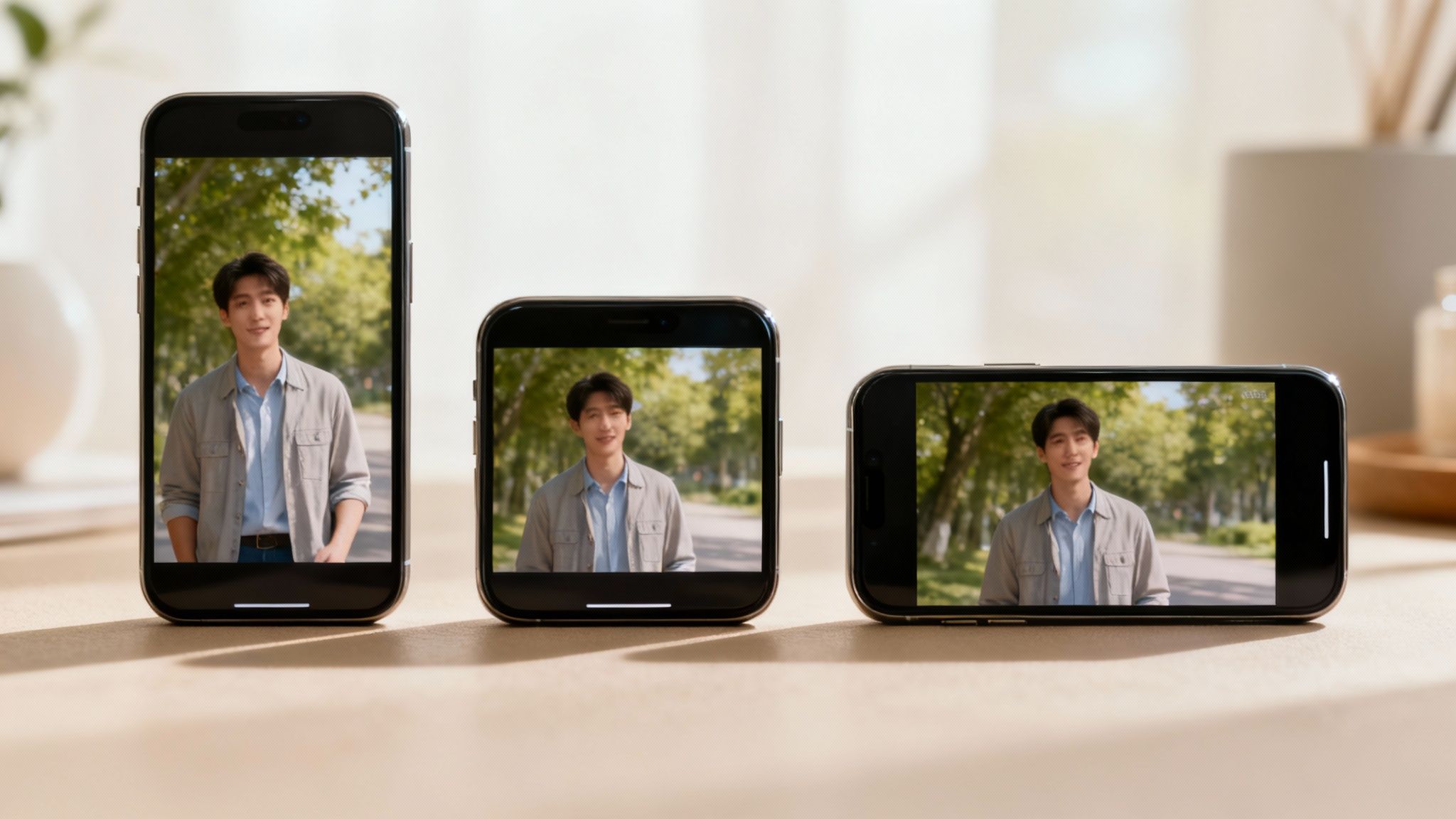
Hitting “post” on the exact same video across all your social channels is a huge missed opportunity. To make a video that actually connects and performs, you’ve got to speak the native language of each platform.
What works on TikTok can feel completely out of place on LinkedIn. A video that crushes it in the Facebook feed will likely flop as an Instagram Story. It’s not just about the technical specs—it’s about understanding the unique culture and expectations of each audience. When you adapt your content, you show you respect your audience’s time, which is the secret to building a real community.
Match the Format to the Feed
Before you even start thinking about the creative side, nail the technical details. The aspect ratio—the literal shape of your video—is the most important starting point. Getting this wrong is an instant red flag; your video will get awkwardly cropped or surrounded by ugly black bars, telling everyone you didn’t bother to format it correctly.
Here’s a quick rundown of what you need to know:
- Vertical (9:16): This is the undisputed champion for Instagram Reels, Stories, TikTok, and YouTube Shorts. It fills the entire mobile screen, creating an immersive experience that keeps viewers locked in.
- Square (1:1): A fantastic choice for the Instagram and Facebook feeds. Square videos grab more screen real estate than landscape videos, making them much harder to just scroll past.
- Landscape (16:9): The classic widescreen format. It’s perfect for YouTube and for embedding on your website, but it’s becoming less common for mobile-first social feeds.
The great thing about Wideo is you can pick the right aspect ratio right from the start when you choose a template. This saves a ton of headaches later and ensures your video looks professional from the get-go.
For a quick reference, here’s a breakdown of the specs for the major platforms.
Social Media Platform Video Specifications
Getting the specs right is your first step toward creating content that feels native to each platform. This table is a handy cheat sheet for the most common video formats.
| Platform | Recommended Aspect Ratio | Maximum Video Length | Key Optimization Tip |
|---|---|---|---|
| Instagram Reels | 9:16 (Vertical) | 90 seconds | Use trending audio and keep it fast-paced to match user expectations. |
| TikTok | 9:16 (Vertical) | 10 minutes | Hook viewers in the first 3 seconds. Authenticity beats high production. |
| YouTube Shorts | 9:16 (Vertical) | 60 seconds | Create tight, looping content that’s engaging and re-watchable. |
| Facebook Feed | 1:1 (Square) or 4:5 | 240 minutes | Optimize for silent viewing with clear captions and strong visuals. |
| LinkedIn Feed | 1:1 (Square) or 16:9 | 10 minutes | Focus on value and professional insights. Keep the tone informative. |
| X (Twitter) | 1:1 (Square) or 16:9 | 140 seconds | Keep it short and to the point. Videos that spark conversation do well. |
Remember, these are guidelines. Always check the latest platform updates, as these specs can change.
Adapt Your Message for Different Audiences
Once the technicals are sorted, it’s time for the real strategy. Think about the mindset of your audience. Someone scrolling LinkedIn during their lunch break is in a completely different headspace than someone browsing Instagram for entertainment at night. Your message has to reflect that.
Let’s say you’re promoting a new software feature. Here’s how you might adapt the message:
- On LinkedIn: You’d focus on the professional payoff—how it boosts productivity, streamlines workflows, or helps teams collaborate better. The tone is all about value and results.
- On Instagram: You might create a punchy Reel showing the feature in action, maybe with some trending audio. The focus is on the cool, user-friendly experience, not just the business metrics.
A one-size-fits-all strategy is a recipe for mediocrity. The brands that win on social media are the ones that tailor their content to feel native and authentic to each platform.
This platform-specific approach is crucial. You can find more detailed strategies in our complete guide on https://wideo.co/blog/how-to-use-video-on-each-social-network/ to further refine your approach.
Design for Silent Viewing
The shift to mobile has completely changed how people consume video. As of 2025, a staggering 70% of YouTube watch time happens on mobile devices. And here’s the kicker: around 85% of mobile videos are watched with the sound off.
If your video depends on a voiceover or music to get its point across, most of your audience will completely miss the message. This makes captions and strong visuals non-negotiable.
- Use Clear On-Screen Text: Your text should be short, easy to read, and perfectly timed to guide the viewer through the narrative.
- Make It Visually Compelling: Use high-quality imagery, engaging animations, and visuals that tell the story on their own, no sound required.
- Tailor Your Call-to-Action (CTA): Use the features of each platform. For Instagram Stories, you might use a “Swipe Up” sticker. For a feed post, you’d point people to the “Link in Bio.” To get more eyes on your content, you also need to understand platform-specific tactics like using the top hashtags for Instagram Reels.
By optimizing for each platform’s unique environment, you ensure every video you share is perfectly positioned to capture attention and drive results.
Got Questions? We’ve Got Answers
Even when you have a great tool in your hands, a few questions always pop up. It’s totally normal. Here are some of the most common things people ask when they’re getting started, along with some straightforward answers to keep you moving.
What’s the Magic Number for Video Length?
Honestly, there isn’t one. The perfect video length really depends on where you’re posting it and what your audience expects to see there. The main goal is always to get your point across before they have a chance to scroll past.
For the fast-paced world of TikTok and Instagram Reels, short and sweet is the name of the game. Aim for 15-60 seconds. If you’re posting to the main Instagram feed, you’ll find that videos under a minute tend to get the most love. For something meatier on YouTube, you can stretch it out to 2-10 minutes, but only if you’re packing every second with value.
No matter the platform, your first three seconds are everything. You have to grab them right away with a killer visual, an interesting question, or something completely unexpected.
Can I Use My Own Fonts and Music in Wideo?
You bet. Keeping your brand looking and sounding consistent is a huge deal, and Wideo is built for that. On our premium plans, you can easily upload your own assets.
This means you can bring in your custom brand fonts, ensuring the text in your videos is a perfect match for your website and other marketing materials. You can also import your own audio files, whether that’s a licensed music track you love or a professional voice-over.
- Custom Fonts: A must-have for making your brand identity feel cohesive everywhere.
- Custom Audio: Gives you the freedom to use your brand’s jingle or a familiar voice.
Just a quick pro-tip: always, always make sure you have the rights to use any music you upload. This is super important for avoiding copyright strikes that can get your video taken down on platforms like YouTube and Facebook.
How Do I Make My Videos More Engaging?
Engagement really boils down to good storytelling. Starting with a polished template gives you a great-looking foundation, but what you do with it is what captures people’s attention.
Try to build a clear narrative. Use high-contrast colors for your text to make sure it’s easy to read on a phone, even if someone’s watching outside. Add simple, clean animations to keep things visually interesting and prevent their eyes from glazing over.
And most importantly, every single video should have a point. End with a clear call-to-action (CTA) that tells your viewers what to do next. It could be anything from “Visit our website” to “Leave a comment” or “Share this with a friend.”
How Can I Add Captions to My Videos?
Captions aren’t just a nice-to-have; they’re essential. A massive chunk of people watch videos with the sound off, so captions make sure your message still gets through.
While Wideo doesn’t have an automatic captioning feature built-in, you can easily add them manually. Just drop text boxes into your scenes and use the timeline to sync them up perfectly with the audio or on-screen action.
Another great option is to export your finished video and use the free captioning tools built into the social media platforms themselves. YouTube, Facebook, and Instagram all have features that will auto-generate captions for you. You can then just go in and edit them for accuracy. It’s often quicker and works like a charm.
Ready to stop wondering and start creating? With Wideo, you have all the tools you need to produce professional, engaging videos that get results on social media. Start your free trial today and see for yourself.