
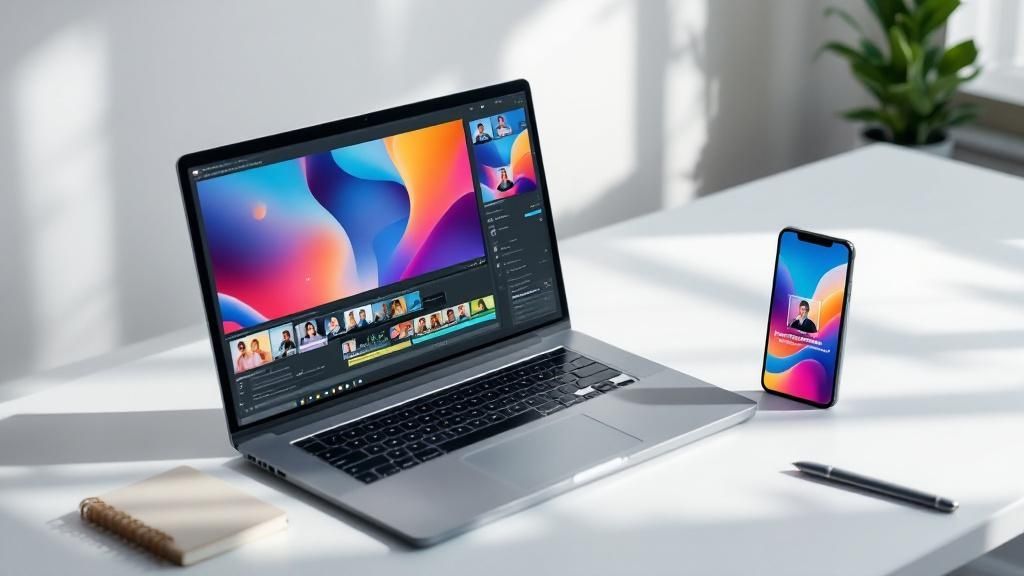
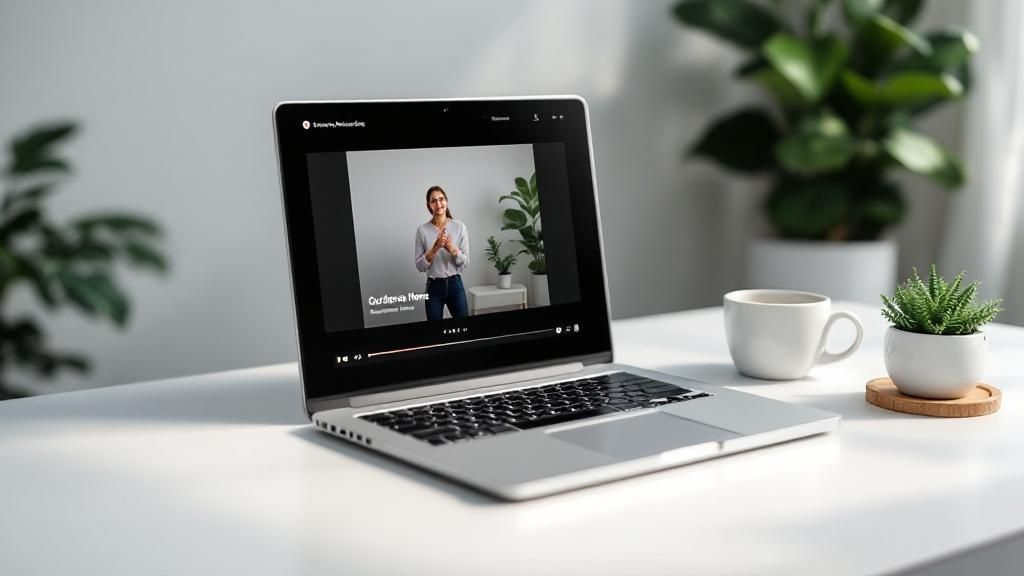
A personalized marketing video is a powerful tool designed to make each customer feel uniquely seen and valued in a crowded digital marketplace. It moves beyond generic, one-size-fits-all messaging by dynamically inserting individual customer data, like their name, company, or recent purchase, directly into the video content, creating a one-to-one connection at scale.
Let’s be honest, we’re all swimming in a sea of ads. The average person has gotten incredibly good at tuning out mass marketing. We just ignore generic messages that don’t speak to our immediate needs or interests. A personalized marketing video completely shatters that barrier by creating an experience that feels exclusive, like it was made just for them.
This isn’t just about grabbing attention; it’s about holding it. Seeing your own name or a detail tied to your journey with a brand sparks a real psychological response. The message feels less like an ad and more like a personal conversation, which nurtures a genuine sense of recognition and importance.
The Shift from Shouting to Connecting
Traditional marketing often feels like shouting into a crowd and just hoping someone pays attention. Personalized video is the complete opposite. It’s like pulling a specific person aside for a friendly chat. This fundamental shift from broadcasting at an audience to communicating with them is what makes this strategy so effective. You’re building relationships, not just chasing transactions.
This level of individual attention isn’t just a nice-to-have anymore, it’s an expectation. Today’s customers are smart. They know brands collect data, and they fully expect that information to be used to make their experience better. In fact, a staggering 80% of customers now expect companies to understand their individual needs.
When you send a personalized video, you’re meeting that expectation head-on.
Here’s what makes it different: Standard video pushes the same message to everyone, while personalized marketing video pulls each viewer into their own unique experience.
Generic vs. Personalized Marketing Video: Which Wins?
| Feature | Generic Video Marketing | Personalized Marketing Video |
|---|---|---|
| Audience | Broad, one-to-many | Individual, one-to-one |
| Message | One-size-fits-all | Customized using individual viewer data |
| Viewer Experience | Passive, often ignored | Active, engaging, feels personal |
| Data Usage | General demographics | Specific customer data (name, history) |
| Impact | Lower engagement, brand awareness | Higher engagement, loyalty, improved outcomes |
| Goal | Reach as many people as possible | Connect deeply with each person |
As you can see, the goals and outcomes are worlds apart. It’s about choosing connection over sheer volume.
From One-Time Buyers to Loyal Customers
When a brand takes the time to create a message just for you, it sticks with you. It builds a memorable connection that generic marketing just can’t match.
Think about these real-world scenarios:
- A welcome video that greets a new subscriber by name, making them feel instantly part of the community.
- An anniversary video celebrating a customer’s loyalty milestone, maybe even showing data on their journey with your brand.
- A thank-you video after a purchase, featuring the specific items they bought and offering relevant tips.
Each of these moments transforms a standard touchpoint into a remarkable experience. This is how you foster genuine loyalty and make your brand stand out in a sea of competitors. It shows you see your customers as people, not just numbers on a spreadsheet. If you’re looking for more ideas, check out our article on 4 ways to wow your audience with personalized video.
The game-changer? Wideo offers a complete personalized video service that easily connects to your existing data, so you can deliver personal experiences to thousands of customers without adding workload to your team.
Building the Foundation of Your Video Strategy
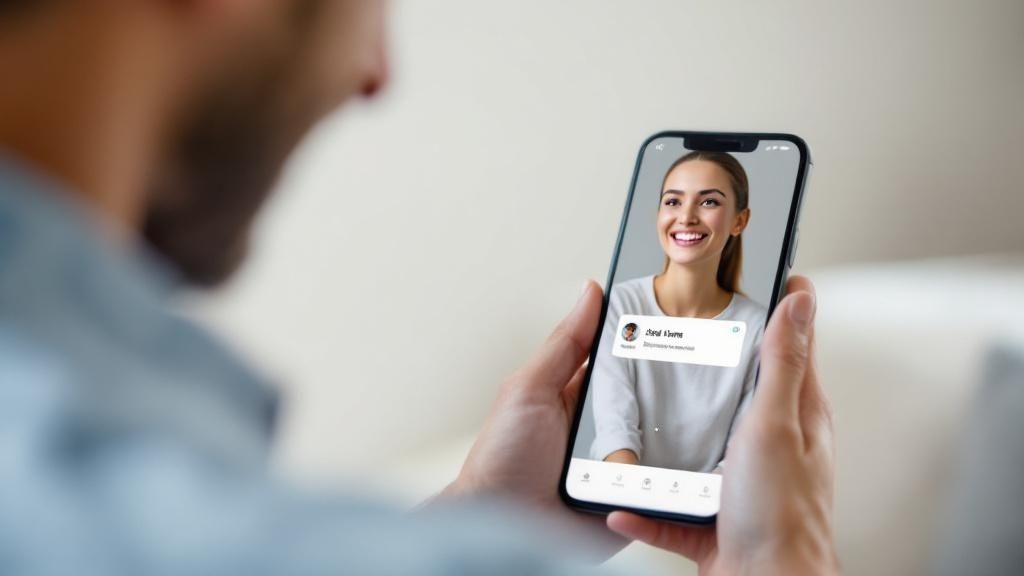
Before you even think about hitting record or dragging a single graphic into place, you need a solid game plan. The success of any personalized marketing video campaign is really decided right here, in the planning stage. A flashy video without a clear mission is just another piece of content lost in the noise.
Defining Your Campaign Goals
Start with the end in mind: what specific outcome are you trying to achieve? Your goals drive every decision in this process, from which customer data to include to how your message should sound. Personalized marketing videos can serve multiple purposes throughout the customer journey.
For instance, are you trying to:
- Welcome new customers? A warm, personalized greeting can make a fantastic first impression and start the relationship off on the right foot.
- Re-engage dormant users? A quick video showing them what’s new or highlighting features based on their past activity can be the perfect nudge to bring them back.
- Celebrate loyalty milestones? Thanking a long-time customer by name and recapping their journey with your brand can create some serious goodwill.
- Encourage event registrations? An invite video that includes the recipient’s name and company feels way more exclusive than a generic email blast.
Every goal calls for its own personalization strategy and data points. Getting crystal clear on your main objective is the foundation of everything that follows.
Identifying the Right Data Points
Once your goal is clear, you can figure out which data points will make your video feel personal without veering into creepy territory. The trick is to use information that adds value and feels genuinely helpful, not invasive.
Key Takeaway: Meaningful personalization is about relevance, not just dropping in data. A first name is a great start, but the magic happens when you connect the video to their specific actions or history with your brand.
Some of the most common data points include:
- First Name
- Company Name or Logo
- Job Title
- Recent Purchase or Product Viewed
- Date of Last Activity
- Loyalty Program Status
Choosing the right data is a bit of a balancing act. For a B2B audience, including their company logo or mentioning their industry shows you’ve done your homework. For a B2C customer, a nod to a recently purchased item or their anniversary as a customer feels much more natural.
Mapping the Customer Journey
With your goals and data points locked in, the next move is to pinpoint the perfect moments to send your video. A personalized video lands with the most impact when it arrives at a key moment in the customer journey, a point where a personal touch can clear up a doubt, celebrate a win, or guide them toward the next step.
Think about where a video could truly make a difference. Is it right after they sign up? A week after their trial expires? Or maybe on the one-year anniversary of their first purchase?
And as you map this out, consider how it fits with your wider marketing efforts. A strong LinkedIn content strategy is especially vital for B2B campaigns. When your video touchpoints and social media engagement are in sync, you create a seamless and much more powerful brand experience.
Finally, picking the right video template is a huge time-saver. A well-designed template gives you brand consistency across every single video while letting you swap out the personalized details effortlessly. This approach saves a ton of time and ensures every video looks polished and professional.
Integrating Personalized Elements Seamlessly
For personalization to work, it has to feel genuine. It needs to look like it was always part of the video. The design of your master template is absolutely critical here, ensuring these dynamic elements blend right in instead of looking like a clumsy, last-minute addition.
Here are a few practical tips I’ve picked up:
- Create Designated “Frames”: Design specific graphic elements, like a badge, a name tag, or a simulated screen, where text variables like a first name or company name will live. This gives the text a defined space and makes it look intentional.
- Use Consistent Fonts and Colors: Make sure any dynamically inserted text automatically uses your brand’s font and color palette. Wideo’s platform is built to maintain this consistency, so “Hello, Sarah!” looks just as polished as “Hello, David!”
- Leave Room for Variable Lengths: People’s names and company titles come in all shapes and sizes. When you’re designing your layout, be generous with space so longer names don’t break the design. It’s always a good idea to test your template with some unusually long and short examples to see how it holds up.
Pro Tip: When designing a spot for a company logo, use a neutral background or a designated shape (like a circle or square). This helps ensure that any logo, no matter its color or complexity, will look clean and professional inside your video.
Scripting and Audio for Scalable Personalization
Your script is the backbone of your video, and it needs to be written to support personalization from the ground up. The main message should be universal, but specific lines can be tailored with dynamic audio for that extra personal touch.
Here’s a simple way to approach the script:
- Write the Core Script: First, nail down the main narrative that everyone will see. This is your evergreen content that gets your key message across.
- Pinpoint Audio Variables: Identify exactly where you need personalized audio. Often, this is just the customer’s name right at the beginning.
- Use Text-to-Speech (TTS): For campaigns at scale, using Wideo’s text-to-speech technology is a total game-changer. You can have a high-quality AI voice speak the variable parts, like the customer’s name, while a professional voiceover handles the rest of the video. The transition can be surprisingly smooth.
Music is the final piece of the puzzle. Pick a track that’s versatile and matches the emotional tone of your overall message. It should be engaging but not so loud that it distracts from the personalized parts. An upbeat, neutral track usually works best, as it can fit anything from a welcome video for new users to a message celebrating a customer milestone.
Automating and Distributing Your Videos at Scale

Your master template looks amazing, but that’s just the beginning. The most compelling personalized marketing video falls flat if it never connects with its intended audience at the right time. Automation and distribution are what turn your creative asset into a powerful revenue-generating machine.
This part is the technical heart of your campaign, where you connect your data directly to your video template. Luckily, it’s far less intimidating than it sounds. Platforms like Wideo are built to make this connection smooth, whether you’re working with a simple spreadsheet or a complex CRM.
Connecting Your Data Source
First things first, you need to link the customer information you’ve gathered to your video template. Think of it as telling your video where to find the names, company logos, or usage stats it needs to personalize itself for each viewer.
The process is designed to be straightforward. For many people, a simple Google Sheet or CSV file is all you need to get going. You just create columns for each variable in your video, like “FirstName,” “CompanyName,” or “LastPurchaseDate”, and Wideo will pull the data from each row to generate a unique video for every single contact.
Setting Up Smart Delivery Triggers
With your data connected, the real magic begins. You can now set up triggers that automatically send a video based on specific customer actions. This ensures your message is not only personal but also incredibly timely. An API call, for example, can act as the perfect trigger.
Key Takeaway: The goal of automation is to deliver a highly personal message at the exact moment of peak relevance, without any manual work. It’s about being present and helpful when your customer is most engaged.
Let’s look at a few real-world scenarios:
- A new user signs up: An API call instantly triggers a welcome video, personalized with their name and company, that lands in their inbox just seconds later.
- A customer completes a key action: After they use a new feature for the first time, a video is automatically sent to congratulate them and offer some advanced tips.
- An account is approaching renewal: A personalized video summarizing their usage and highlighting the value they’ve received is sent a month before their subscription ends.
These automated touchpoints transform routine moments into memorable interactions, building a much stronger connection with your audience. For a deeper dive into how this works in a specific industry, exploring how to use personalized video to win customers in the SaaS sales funnel can offer some valuable insights.
Measuring What Matters and Optimizing for Growth
Your personalized marketing video is live and looking great but now comes the critical part: measuring what actually matters.
View counts are vanity metrics. Real success lies in the deeper data that shows genuine business impact. This is how you evolve from creating one-off campaigns to building a systematic approach that consistently drives growth.
Focus on the metrics that matter: Are people clicking through? Are they staying engaged? Are they converting? These are the numbers that prove your personalization strategy is paying off
The Metrics That Actually Matter
It’s easy to get a thrill from seeing thousands of views roll in, but that number doesn’t tell the whole story. A viewer could watch for three seconds and bounce, yet they still get counted. That’s a vanity metric.
Instead, let’s focus on the metrics that show genuine interest and action. To really get a feel for the impact, you need to track and analyze key campaign performance metrics that reflect what your viewers are actually doing.
Here are some of the most valuable KPIs I always keep an eye on:
- Click-Through Rate (CTR): This is the gold standard. It’s the percentage of viewers who clicked your in-video CTA. It’s a direct measure of how compelling your offer and your video, truly were.
- Video Completion Rate: How many people stuck around to watch the whole thing? A high completion rate is a fantastic sign that your content was engaging and held people’s attention.
- Landing Page Dwell Time: For viewers who click through, how long are they hanging out on your site? Longer sessions mean they’re genuinely interested and absorbing your message.
- Business Goal Impact: This is the ultimate test. Track the direct influence on core goals like customer retention, lead generation, or sales uplift.
Analyzing this data helps you understand what truly resonates with your audience. You can get even more granular by exploring our detailed guide on how to measure the success of your marketing videos.
Using Viewer Data to Refine Your Strategy
The data you collect isn’t just for reports; it’s a goldmine for optimization. It shows you which personalization tactics are hitting the mark, allowing you to make smart, data-driven decisions for your next campaign. This is where you can start experimenting to see what really makes a difference.
For instance, you can dig into the data to answer specific, practical questions:
- Does showing a company logo get more clicks than just using a first name?
- Do videos with dynamic text-to-speech for the name have a better completion rate than those with only on-screen text?
- Is a direct CTA like “Book a Demo” more effective than a softer one like “Learn More”?
Pro Tip: Don’t just look at the overall campaign numbers. Slice and dice your results. Segment them by audience type, data source, or delivery channel. You might discover that what works for brand new leads is completely different from what re-engages dormant customers.
Common Questions About Personalized Marketing Videos
Even with a solid game plan, jumping into something new like personalized marketing video can stir up a few questions. That’s perfectly normal. We’ve been there. Below, we’ve put together answers to the most common questions we hear from marketers, giving you the straight-up, practical advice you need to get going with confidence.
How Much Data Do I Really Need to Get Started?
This is the big one, and the answer is refreshingly simple: you can start with just a first name. Seriously.
Advanced data points like company logos or purchase history are powerful, but they’re not required to see results. The difference between “Hey, Sarah!” and “Hello there” might seem small, but it’s transformative for the person watching.
The key is to begin with the data you have on hand and are comfortable using. As you get the hang of it and see the results, you can start weaving in more sophisticated data points.
Will Personalization Feel Invasive or Creepy to My Audience?
This is a totally valid concern. Nobody wants to come across as creepy. But it all boils down to context and value. Personalization feels helpful, not weird, when the data you use actually makes sense in the context of their relationship with your brand.
For example, a video celebrating a customer’s one-year anniversary with you feels thoughtful. A video with quick tips on how to use a product they just bought is genuinely useful. It only gets strange when you use information that feels out of place or way too familiar.
A great rule of thumb is to ask yourself: “Does this information make the video more helpful or relevant for my customer?” If the answer is yes, you’re on the right track.
What’s the Best Way to Distribute These Videos?
The “best” channel really depends on where your audience hangs out and what you want the video to accomplish. However, email remains a proven winner. Personalized videos in email campaigns can drive click-through rates up by 300% or more.
For B2B marketing, a personalized video message on LinkedIn can be an incredibly effective way to cut through the noise. In other cases, embedding the video on a dedicated landing page gives your viewer a focused, distraction-free experience. The main goal is to meet your audience where they already are.
Ready to experience the power of personalized video for yourself? Wideo provides everything you need to create, automate, and scale video campaigns that speak directly to each customer. Start creating videos that truly connect.
Related posts:
 Personalized Video: 4 Ways to Wow Your Audience
 How to Use Personalized Video to Win Customers Throughout the SaaS Sales Funnel
 Good Ways to Increase Conversions for Your Landing Page Video
 How to create the best Intro Video for your Business
 How to use Video Marketing on LinkedIn (Upload Native Videos!)
 How to Increase Your Ecommerce Sales with Video Marketing