
Think of it as your own personal digital animator, ready to bring your words to life without needing a camera, microphone, or actor.
Your Introduction to the World of AI Avatars
Welcome to the next wave of digital communication. Not too long ago, creating a lifelike digital persona was the stuff of science fiction, something that required animation studios and massive budgets. Today, an AI avatar generator puts this technology in the hands of everyone, from marketers to educators.
These tools are built on some pretty powerful concepts, like generative AI and machine learning. But you don’t need to be a data scientist to get the hang of it. Put simply, the AI reads your text script, generates a human-like voice, and then animates a digital character to speak those words with synchronized lip movements and natural expressions.
The Power of a Digital Persona
So, what does this actually mean for you? It means you can now create high-quality video content faster and more affordably than ever before. This technology opens up a ton of possibilities:
- Create engaging training videos with a consistent presenter for every single module.
- Develop personalized marketing campaigns that speak directly to individual customers.
- Build a unique brand identity with a custom digital mascot or spokesperson.
- Produce content in multiple languages without the hassle of hiring different actors.
The core benefit of an AI avatar generator is scalability. It allows you to produce an endless stream of professional video content with minimal resources, turning a single script into a dynamic presentation in minutes.
In a nutshell, this technology tears down the traditional barriers to video production. You no longer need expensive equipment or serious editing skills to create a video that grabs your audience’s attention. Instead of coordinating a whole film crew, you just type a script and click a button.
Throughout this guide, we’ll dig into how you can put this groundbreaking tool to work for your specific goals, from the initial idea all the way to the final video.
How an AI Avatar Generator Brings Your Ideas to Life
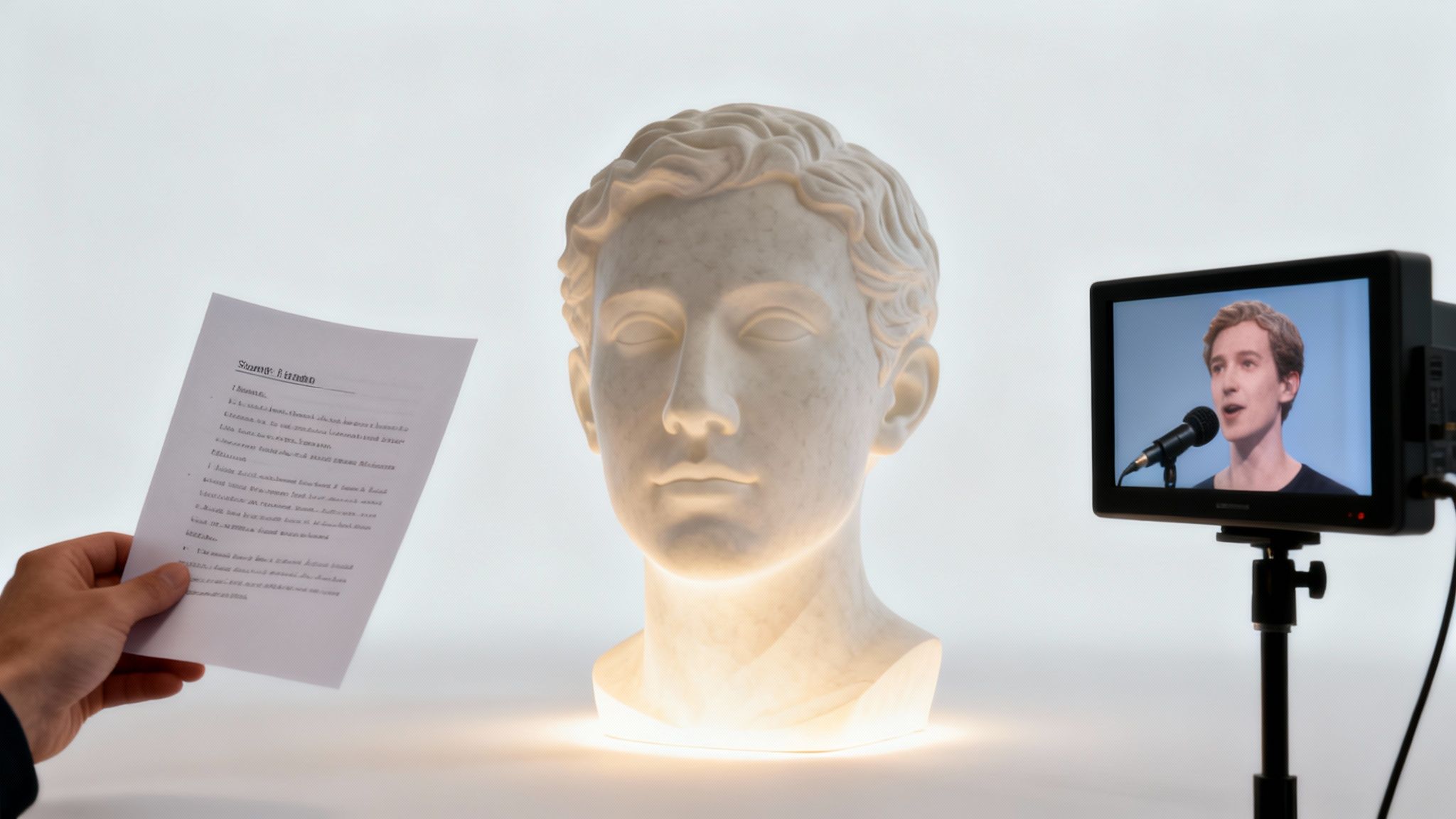
So, how does an AI avatar generator actually turn a simple text file into a talking, gesturing digital person? Think of it like hiring a super-efficient digital sculptor and a director who work together, guided only by your script. This team pulls off the entire production in a slick three-stage process to get your vision from the page to the screen.
First up, your script is handed to the “director.” This stage is all about understanding your words and giving them a voice. The AI uses Natural Language Processing (NLP)—which is just a way of saying it can read and understand human language—to break down your script. At the same time, you’ll pick a voice from a huge library, or even clone your own, to nail the tone.
Crafting the Digital Actor
With the audio track ready to go, the “digital sculptor” steps in to create the visuals. This is where powerful AI models, like Generative Adversarial Networks (GANs), get to work. These models have been trained on thousands of hours of human footage, so they’ve learned the tiny details of facial structures, expressions, and features.
Based on what you’ve picked—whether it’s a photorealistic presenter or a stylized character—the AI builds the avatar’s face and overall look. This isn’t just a static picture; it’s a complex digital puppet, ready to be brought to life with nuance. If you’re curious how AI fits into the bigger picture of content generation, you can check out some of the best AI content creation tools out there.
This kind of tech is fueling a seriously fast-growing market. The AI avatar app industry was valued at USD 1.35 billion in 2024 and is expected to hit USD 11.54 billion by 2032. It’s all driven by tools that can slash content creation costs by up to 90%.
Directing the Final Performance
Finally, the director brings it all together for the main event. The AI meticulously syncs the avatar’s lip movements to the audio track, making sure every single word is matched perfectly.
But it does more than just lip-syncing. The AI adds in subtle, natural animations like blinks, head tilts, and small facial expressions to make the performance feel real and keep your audience engaged. The final product is a seamless video where a digital human delivers your script with surprising realism.
The Key Takeaway: An AI avatar generator automates the whole production workflow—from voice acting to animation—by breaking it down into three key steps: interpreting the script, sculpting the character, and directing the final animated performance.
This automated process is the engine behind any great AI avatar generator, and getting how it works is the first step toward making incredible content. For anyone ready to see this in action, check out Wideo’s https://wideo.co/ai-video-generator/.
Choosing the Right Type of AI Avatar
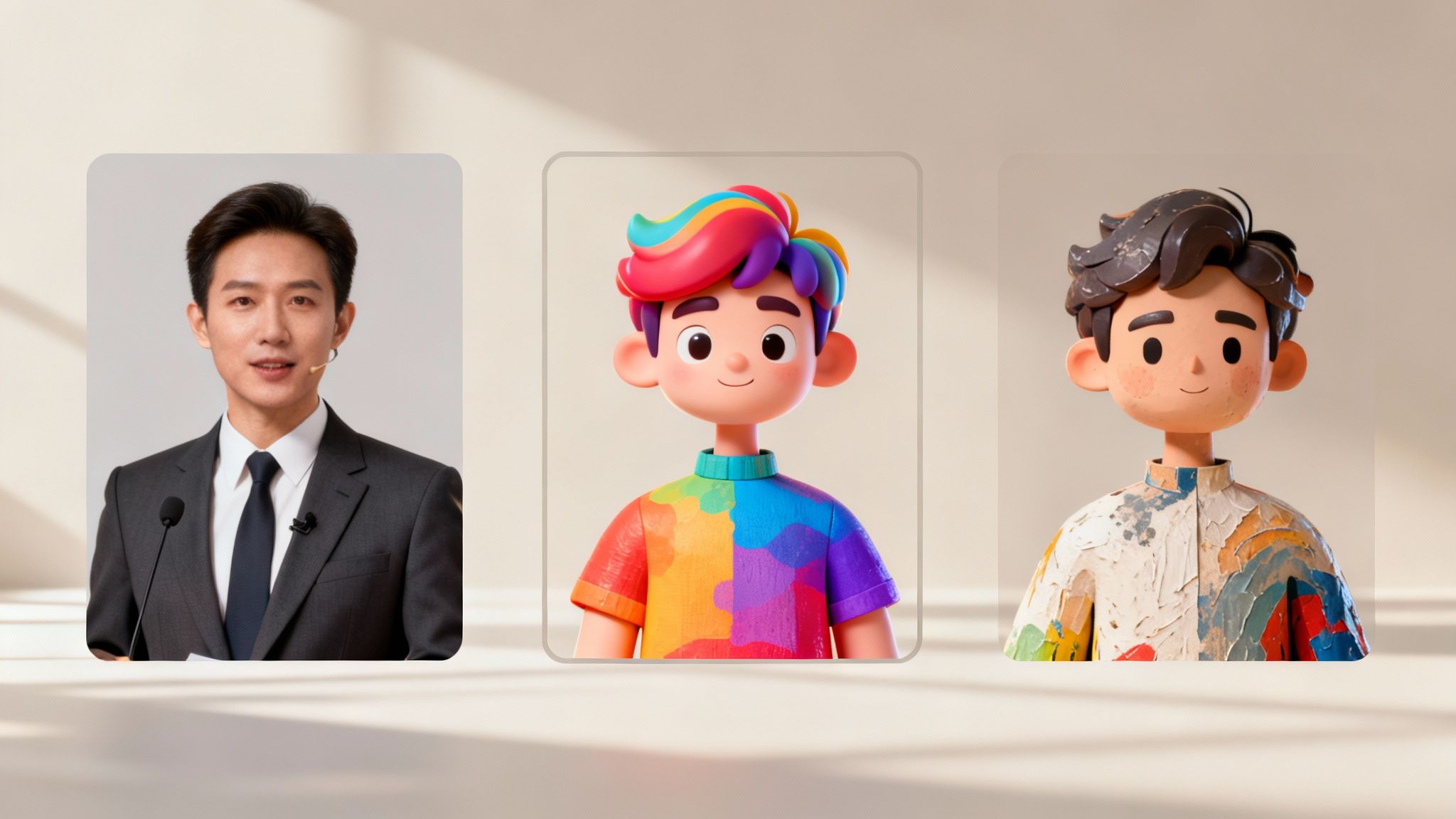
Picking an AI avatar isn’t a one-size-fits-all deal. The digital persona you choose has a huge impact on how your message lands, so matching the style to your goal is everything. Each type of avatar brings a totally different flavor to the table.
Think of it like picking an outfit. You wouldn’t wear a casual t-shirt to a formal business meeting, and the same logic applies here. An AI avatar generator is like your digital wardrobe, stocked with everything from hyper-realistic humans to fun, quirky cartoon characters. Let’s walk through the three main styles to help you find the perfect fit.
Photorealistic Avatars
Photorealistic avatars are crafted to look and feel as close to a real person as possible. They’re the go-to when you need to build credibility, maintain a professional tone, and create a genuine human connection. These avatars really shine in corporate and educational videos where authenticity is king.
Their biggest strength is their ability to build trust with an audience. A photorealistic avatar is perfect for things like:
- Corporate Training Modules: Delivering consistent, professional instruction across your whole organization.
- Onboarding Videos: Welcoming new hires with a friendly, human-like guide to the company.
- Company Announcements: Presenting important updates with a serious and credible tone.
Animated Avatars
Next up, we have animated avatars. These characters trade in realism for a big dose of personality and brand expression. They often look like they jumped straight out of an animated movie or a graphic novel, which makes them fantastic for grabbing attention and telling memorable stories, especially on busy platforms like social media.
This style is a great match for brands that want to come across as friendly, approachable, and fun. It’s less about formal presentations and more about pure engagement. Here’s where they work best:
- Social Media Content: Creating clips and explainers that are quirky enough to stand out in a crowded feed.
- Brand Storytelling: Using a unique mascot to embody your brand’s personality and values.
- Educational Content for Kids: Making learning fun and accessible with colorful, engaging characters.
The right avatar style amplifies your message. A photorealistic avatar lends authority to a corporate training video, while an animated one injects personality into a social media campaign, ensuring your content resonates with the intended audience.
Stylized Avatars
Stylized avatars carve out a creative middle ground. They aren’t trying to be perfectly real, but they’re not simple cartoons either. Instead, they embrace unique artistic looks—think watercolor, sketch, or even cyberpunk aesthetics. These are for creators who want to make a bold statement and build a brand identity that’s impossible to ignore.
This type of avatar is all about standing out from the crowd. It helps you create a memorable visual signature that’s entirely your own. You’d use a stylized avatar generator for:
- Creative Branding: Establishing a distinct, art-driven look for your channel or company.
- Gaming and Streaming: Crafting an unforgettable persona for platforms like Twitch or YouTube.
- Artistic Projects: Experimenting with different visual formats for music videos or short films.
To make the choice even clearer, let’s break down how these avatar types stack up against each other.
Comparison of AI Avatar Types
| Avatar Type | Key Characteristics | Best For | Pros & Cons |
|---|---|---|---|
| Photorealistic | Human-like appearance, realistic expressions, professional tone. | Corporate training, onboarding, official announcements, educational content. | Pro: Builds trust and credibility. Con: Can fall into the “uncanny valley” if not well-executed. |
| Animated | Cartoon or comic-style, high personality, brandable characters. | Social media marketing, brand storytelling, children’s content. | Pro: Highly engaging and memorable. Con: May not be suitable for formal or serious topics. |
| Stylized | Unique artistic aesthetics (e.g., sketch, watercolor), creative and distinct. | Creative branding, artistic projects, gaming/streaming personas. | Pro: Highly unique and helps you stand out. Con: The specific style might not appeal to all audiences. |
Ultimately, the best avatar is the one that aligns with your brand’s voice and the goals of your video. Whether you need a trusted expert, a fun mascot, or an artistic visionary, there’s an AI avatar style ready to bring your message to life.
How Businesses Are Using AI Avatars to Grow
The theory behind an AI avatar generator is cool, but its real power comes alive when you see how businesses are putting it to work. Companies are starting to look past the usual content creation methods, using AI avatars to get a real competitive edge in places like marketing and corporate training.
These digital faces aren’t just a gimmick anymore; they’re becoming a key part of business strategy. They open up a way to produce a ton of high-quality video content that used to be impossible for many companies because of tight budgets and limited resources. From personalized ads to training programs that span the globe, AI avatars are delivering real results.
Revolutionizing Marketing and Sales
In the crowded world of marketing, just getting noticed is half the battle. AI avatars give marketers a powerful new way to create dynamic, personalized video content that actually cuts through the noise. Instead of dealing with expensive, time-consuming video shoots, they can now spin up hundreds of video variations in minutes.
This is a game-changer for creating campaigns that can scale. Picture a real estate company sending out thousands of unique video updates to potential buyers. Each video features an avatar that calls the person by name and shows off properties that fit their specific interests. That level of personal touch creates a much stronger connection. You can see more on how this works in our guide on personalized video marketing.
- Brand Mascots: Companies are designing unique animated or stylized avatars to act as brand ambassadors. This gives them a consistent and memorable personality across all their social media channels.
- Product Demos: An avatar can walk through a product demonstration perfectly, every single time, explaining complex features in a way that’s clear and easy to follow.
- Personalized Outreach: Sales teams are using avatars to whip up quick, customized introduction videos for prospects, which helps their outreach emails get much higher engagement rates.
Transforming Corporate Training and Onboarding
Corporate training is another area getting a major upgrade from AI avatars. We’ve all sat through training sessions that were inconsistent because of different instructors, or just plain boring with text-heavy slideshows. AI avatars fix this by offering a training solution that’s consistent, engaging, and can be scaled up infinitely.
A global company can create one master training course and then use an AI avatar generator to instantly translate and deliver it in dozens of languages. This makes sure every employee gets the exact same high-quality instruction, no matter where they are in the world. It’s a huge win for keeping compliance and brand standards locked in across international teams.
An AI-powered presenter never has an off day. They deliver flawless, consistent training 24/7, enabling organizations to deploy critical updates and onboarding materials globally overnight without logistical headaches or additional costs.
The growth here is part of a massive market shift. The whole AI avatar market is expected to jump from USD 0.80 billion in 2025 to USD 5.93 billion by 2032. In customer service alone, these digital humans can slash response times by 40% and boost satisfaction by 25%, which really shows off how efficient and scalable they are. Discover more insights about the AI avatar market’s growth.
Whether it’s making customer-facing communications better or streamlining how things get done internally, AI avatars are proving to be an incredibly versatile and effective tool for business growth.
Your First Steps to Creating an AI Avatar Video
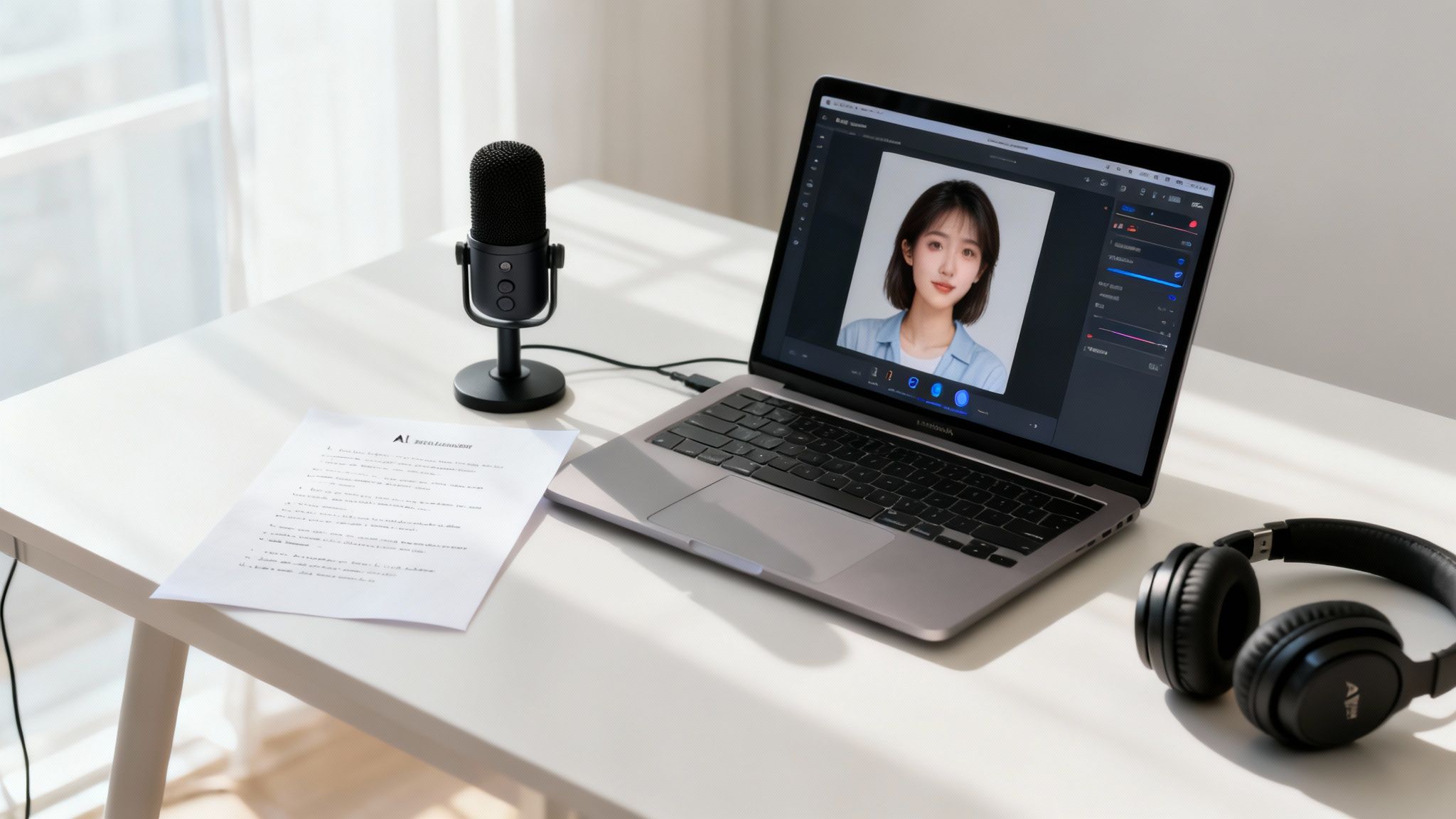
Okay, moving from theory to practice is where the real fun begins. Making your first AI avatar video is a pretty straightforward process, broken down into just a few manageable steps. The whole workflow is designed to take you from a simple idea to a polished, professional video without any technical headaches.
Think of an AI avatar generator as your personal production studio. You get to be the director, making all the key creative calls, while the platform does the heavy lifting of animation and voice generation. Let’s walk through the exact steps to bring your first project to life.
1. Select Your Avatar and Voice Style
Your journey starts with picking your digital presenter. This is a big decision, since the avatar really sets the tone for your entire video. As you browse the platform’s library, think about your audience. Do you need a formal, photorealistic expert for a training module, or would a friendly, animated character work better for a quick social media clip?
Next up, pair that avatar with the perfect voice. Most tools give you a huge selection of languages, accents, and tones. Listen to a few samples to find a voice that fits your brand’s personality and the message you want to get across. Pro-Tip: Consistency is key. If you’re planning a whole series of videos, try to stick with the same avatar and voice to build recognition.
2. Write a Natural-Sounding Script
With your digital star chosen, it’s time to write their lines. Crafting a script for an AI voice is a little different than writing for a person. For the best results, keep your sentences clear, concise, and conversational.
Read your script out loud. This is the best way to catch any awkward phrasing or clunky sentences. Remember, the AI is reading your text literally. You can guide its performance using simple punctuation to create a more natural rhythm.
- Commas: Use them to create short, natural pauses within a sentence.
- Periods: These signal a full stop and a slightly longer break between your ideas.
- Short Paragraphs: Breaking your script into smaller chunks helps the delivery feel much more conversational.
3. Generate and Refine Your Video
Now, you bring it all together. Copy and paste your script into the text box of the AI avatar generator, double-check that your chosen avatar and voice are selected, and hit generate. The platform will take a few moments to process everything—synthesizing the audio and animating the avatar’s lip movements to match.
The first draft is rarely the final one. Review the generated video and listen for any weird pacing or mispronunciations. Don’t be afraid to go back and tweak your script with different punctuation or even phonetic spellings to get the delivery just right.
Once you’re happy with how it sounds, you can add the final touches. Many platforms, including Wideo, let you add backgrounds, text on the screen, and music to really complete your video. Finally, export your creation and you’re ready to plug it into your marketing campaigns, training materials, or website.
Best Practices for Using AI Avatars Responsibly
Using an AI avatar generator opens up incredible creative possibilities, but it also comes with the responsibility to use the technology in an ethical and effective way. Following a few best practices will ensure you’re not only making great content but also building and keeping trust with your audience.
First off, let’s talk technical quality. The realism of your avatar’s performance really boils down to your script and audio. A clean, well-paced script paired with high-quality audio is the secret sauce for natural-sounding speech and accurate lip-syncing. If you feed it poor inputs, you’ll get robotic or awkward results. To learn more about getting the best performance, check out our guide on modern text-to-speech technology.
On that same note, visual consistency is a big deal for branding. If you’re using an avatar as the face of your company, keep its appearance consistent across all your videos. This helps build recognition and solidifies your brand identity.
Navigating Ethical Considerations
Beyond the technical polish, using this tech responsibly is non-negotiable. Transparency is the golden rule here. Always be upfront with your audience that they’re interacting with an AI-generated character, not a real person. This simple heads-up prevents any feeling of deception and actually builds your credibility.
Never, ever use an AI avatar generator to create a digital version of a real person without their clear, informed consent. This isn’t just an ethical misstep; it can have serious legal consequences.
It’s also crucial to guard against misuse. Think about how your content could be interpreted and steer clear of creating anything that might be mistaken for a deepfake or used to spread misinformation. Sticking to these ethical guidelines will help you make the most of this powerful tool while respecting your audience and maintaining your integrity.
- Be Transparent: Always disclose when you are using an AI-generated avatar.
- Obtain Consent: Never create an avatar of a real person without their permission.
- Prevent Misuse: Avoid creating content that could deceive or spread false information.
Your Questions About AI Avatars, Answered
As you start digging into what AI avatar generators can do, a few practical questions always pop up. Let’s get you some clear, straightforward answers to the most common ones so you can move forward with confidence.
How Much Does an AI Avatar Generator Cost?
The price tag can swing quite a bit depending on what you’re after. Many tools will let you dip your toes in with a free trial or a basic plan that has some limitations, which is perfect for just trying things out.
For solo creators, you’ll often find paid plans starting in the ballpark of $20 to $30 a month. If you’re part of a team that needs the works—like custom avatars, API access, and collaborative tools—you’ll be looking at enterprise plans that can climb into the hundreds each month.
Can I Make an AI Avatar That Looks Like Me?
You absolutely can, and honestly, this is one of the coolest features out there. Many of the top platforms offer a premium service to create your own “digital twin.”
The process is pretty simple. You’ll typically upload a short, high-quality video of yourself or maybe a few good photos. The AI then gets to work analyzing your likeness to build a realistic, fully animatable avatar. It’s the perfect way to add a personal, human touch to your videos without having to be on camera every time.
What Are the Limitations of AI Avatars?
While the technology has come a long way, it’s not without its quirks. The emotional range and subtle body language of an AI avatar might not quite capture all the nuances of a live human actor just yet.
Even though they’re constantly improving, you might still notice occasional imperfections in lip-syncing, especially with complex or uncommon words. Getting highly dynamic or intricate movements right is also a challenge most platforms are still working on.
For most common uses, like putting together presentations or training videos, these limitations are pretty minor. But it’s good to keep them in mind.
Ready to create stunning videos with a powerful yet easy-to-use platform? Explore Wideo today and see how our tools can bring your ideas to life in minutes. Discover more at wideo.co.
Related posts:
 Beyond Automation: How AI Software Is Redefining Creative and Strategic Work
 Ai algorithms: How They Power Modern Tech and Everyday Apps (ai algorithms)
 A Practical Guide to Implementing AI Solutions
 The Top 10 AI Trends Marketers Must Watch in 2025
 A Practical Guide to AI Innovation and Business Growth
 Ai Avatar Mastery: Create Your ai avatar for Marketing


