

Let’s be honest—the era of one-size-fits-all marketing is over. Generic campaigns feel like shouting into a void. Today’s customers don’t just prefer personalized experiences; they expect them. They want to feel seen, understood, and valued.
This isn’t a passing trend. It’s a fundamental shift in the relationship between brands and the people they want to reach, and it presents a massive challenge: how do you create millions of unique, personal moments without an army of creatives working around the clock?
Moving Beyond One-Size-Fits-All Marketing
For years, marketers have chased the dream of true one-to-one communication. The roadblock has always been the same: scaling genuine personalization has been practically impossible. The sheer human effort required was simply too much.

And that’s where the daily struggles kick in. Teams are stretched thin trying to maintain brand consistency across countless customer segments. The dream of a unique journey for every single customer often stays just that—a dream. Basic automation can send the emails, but it can’t create truly distinct content for each person receiving them.
The Personalization Gap
This disconnect between what customers want and what brands can actually deliver is the “personalization gap.” Conditioned by platforms like Netflix and Spotify to expect content that just gets them, people find generic marketing jarring and out of touch.
Closing this gap means going way beyond just segmenting an email list or dropping a first name into a subject line. It demands a much deeper understanding of behavior, preferences, and context. To really get past generic messaging, you have to nail your content personalization strategies.
Deep Learning as the Engine for Connection
This is exactly where deep learning comes in. Think of it not as some impossibly complex tech, but as the engine that finally makes authentic, scalable communication a reality. It’s the tool that bridges the gap between raw data and genuine human connection.
Imagine systems that don’t just crunch customer data but actually use it to create tailored stories, unique explanations, and helpful guidance for every single person.
Deep learning allows brands to finally break through the limits of manual creation by automating the intelligence behind personalization. This isn’t about replacing creatives; it’s about amplifying their work to a scale that was never possible before. It’s the key to making every interaction feel like it was crafted for an audience of one. If you want to see this in action, understanding the power of a personalized video for marketing is a great place to start.
How Deep Learning Creates Human Connections at Scale
Let’s cut through the noise. When we talk about deep learning in marketing, what do we really mean? Forget the academic definitions. Think of it as a creative partner that learns from your data, giving your team capabilities that human teams simply can’t achieve at speed or scale.
It’s the engine behind systems that don’t just analyze customer data but actually transform it into compelling, personalized moments for every single individual.
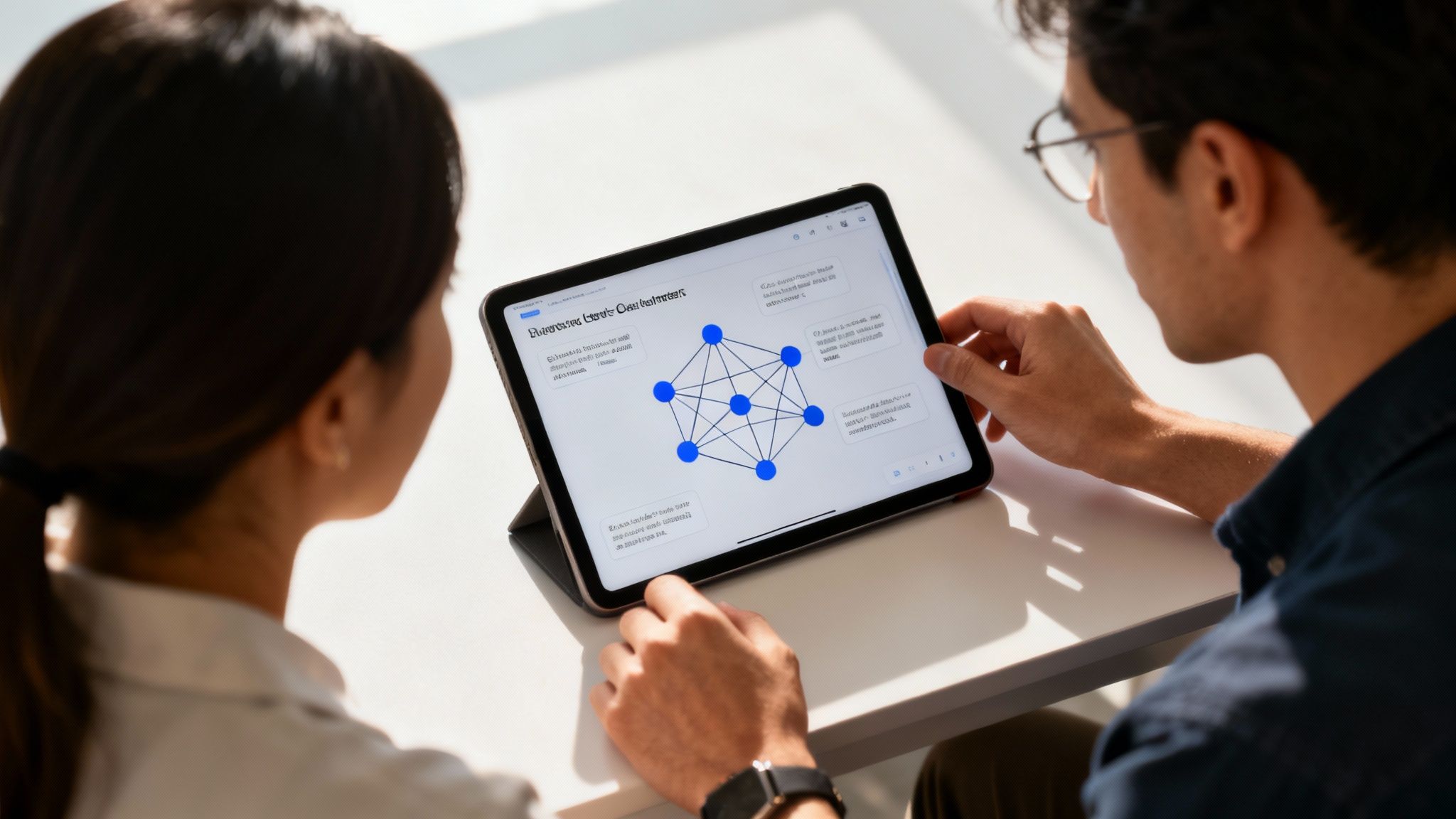
This was never about replacing the human touch; it’s about making that touch infinitely scalable. Deep learning models spot the subtle patterns in behaviors, preferences, and interactions that even the most dedicated analyst would miss. Instead of just looking at what a customer did, these systems start to anticipate what they might need next.
From Raw Data to Tailored Storytelling Moments
The real magic happens when deep learning moves from analyzing to creating. It opens up workflows that once felt like science fiction, enabling brands to do things human teams can’t.
Here’s how these systems help build deeper connections:
- Generating AI avatar videos that adapt to each audience segment. A single core message can be delivered by an AI presenter in countless ways, each one fine-tuned to resonate with a specific customer profile.
- Creating dynamic scripts based on user behavior. Imagine a video script that rewrites itself based on the features a customer used, the articles they read, or even what they left in their shopping cart.
- Delivering personalized onboarding messages. New users get welcome videos that don’t just say their name but highlight the exact tools and features most relevant to their goals.
- Predicting what content a viewer needs before they ask. By analyzing usage patterns, the system can proactively generate a helpful tutorial to address a likely roadblock.
- Transforming raw customer data into tailored storytelling moments. Your CRM data is no longer just a spreadsheet; it’s the raw material for a unique story for each customer.
It’s the difference between shouting a message to a crowd and having a quiet, helpful conversation with each person in it. This is how brands stop creating for broad personas and start crafting experiences for individuals.
Nowhere is this impact more obvious than in video. Deep learning doesn’t just tweak existing video strategies; it opens up entirely new playbooks. It allows for real-time content adaptation that keeps viewers engaged, whether the goal is to improve retention, cross-sell a new product, or reactivate a dormant user.
Consider a SaaS platform fighting customer churn. Instead of a generic “we miss you” email, its system automatically generates a short, personalized video for a disengaged user. Delivered by a friendly AI avatar, the video highlights a new feature directly related to that user’s past activity, reigniting their interest in a way a simple email never could. To see how technology can create these tailored experiences, it’s worth exploring the concepts behind artificial intelligence personalization.
Brands adopting deep-learning-driven video creation are discovering an entirely new level of personalization. Tools like Wideo make it possible to generate AI avatar videos and automated customer journeys that scale without sacrificing human connection. This isn’t just automation; it’s creativity, amplified.
Redefining the Video Experience with Deep Learning
This is where the theoretical gets real. We’re moving past the buzzwords to see how deep learning becomes a game-changing tool for marketers who live and breathe video. Forget the old “one-size-fits-all” broadcast that you hope lands with a massive audience. We’re stepping into the world of dynamic, living video journeys.
Deep learning isn’t just about making old video formats a little better; it’s about creating entirely new kinds of content that simply weren’t possible before—from AI avatar explainers and personalized updates to fully automated onboarding journeys and customer education videos.
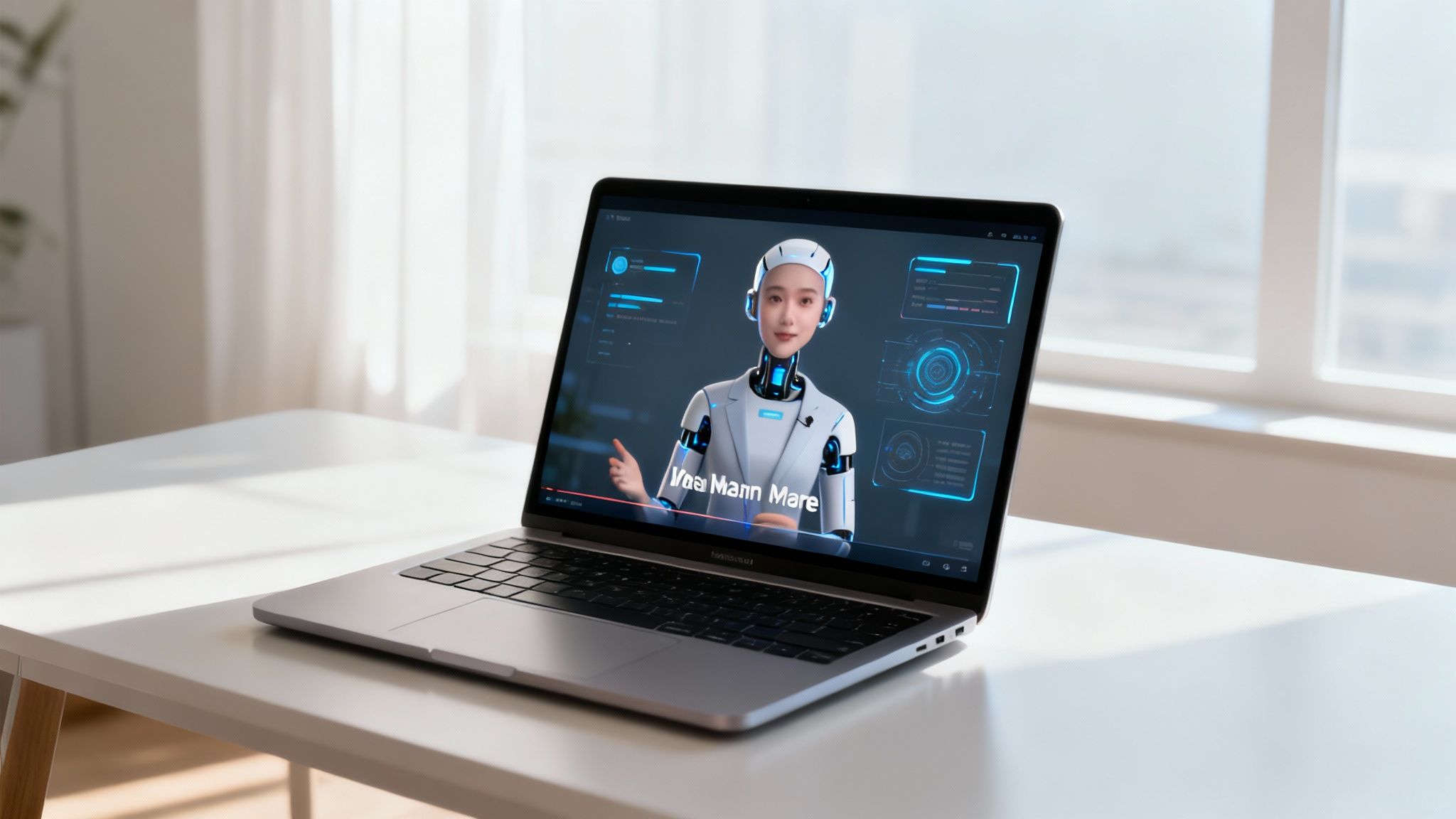
The goal is to show you what’s possible right now. Imagine AI-generated presenters delivering perfectly consistent, on-brand messages 24/7, tailored to a specific viewer’s questions. Or picture automated video sequences triggered not by a mass email blast, but by one single user’s micro-behaviors on your website.
From Static Broadcast to Dynamic Conversation
The fundamental shift is from video as a one-way street to video as a two-way conversation. Deep learning acts as the director, producer, and editor for thousands of individual video experiences, all running simultaneously.
This enables workflows that create a much deeper level of engagement:
- Real-time content adaptation. The system can tweak a video’s content on the fly for retention, cross-sell, or reactivation, making the message instantly relevant.
- AI-generated presenters for consistency. Ensure every customer gets the same high-quality, on-brand message, delivered with a human touch by an AI avatar, eliminating performance variability.
- Hyper-personalized video journeys from CRM or product data. Connect your customer data directly to the video creation engine. Suddenly, CRM fields and product usage stats become powerful, personalized storytelling moments.
- Automated video sequences triggered by micro-behaviors. A user visits your pricing page three times in a week? They automatically get a video from an AI avatar breaking down the value of each tier, just for them.
Deep learning transforms video from a monologue into a dialogue. It listens to user data and responds with content that is uniquely helpful, relevant, and timely for that specific individual.
To really grasp the difference, it helps to see the old way and the new way side-by-side. The traditional approach is static and built for the masses, while the deep learning method is dynamic and built for the individual.
Traditional Video vs Deep Learning-Powered Video
| Aspect | Traditional Video Marketing | Deep Learning-Powered Video |
|---|---|---|
| Creation | Manual, one-off production. | Automated, template-driven generation. |
| Personalization | Generic, one-size-fits-all message. | Dynamically personalized for each viewer. |
| Scalability | Limited by production resources. | Scales to thousands or millions of unique videos. |
| Triggers | Launched manually (e.g., campaigns). | Triggered automatically by user behavior or data. |
| Engagement | Passive viewership, one-way broadcast. | Interactive, conversational, two-way dialogue. |
| Data Usage | Based on broad audience segments. | Leverages individual CRM and behavioral data. |
| ROI | Measured by broad campaign metrics. | Measured by individual conversion and retention. |
This table makes it clear: we’re not just talking about a minor upgrade. It’s a completely different way of thinking about how video connects with people.
Practical and Creative Examples in Action
This isn’t some far-off concept; it’s happening today. The applications are both practical and incredibly creative, solving real business problems across different industries.
For instance, a bank can use AI avatars to explain complex loan options differently to each customer profile. Instead of a generic video, a first-time homebuyer sees a version focused on down payments, while a small business owner gets one tailored to commercial financing.
A SaaS platform can fight churn by generating personalized renewal videos based on feature usage. These videos don’t just ask for a renewal; they celebrate what the user accomplished, highlighting the specific features they used most over the past year. It makes the renewal feel earned.
Likewise, a fitness brand can use deep learning to adapt motivation videos to user progress patterns. Someone hitting a new personal best gets a congratulatory message, while a user who missed a few workouts receives an encouraging nudge to get back on track.
These examples all point to one thing: scalable empathy. Deep learning allows brands to show they understand a customer’s individual journey, needs, and context, which builds much stronger relationships. Brands adopting deep-learning-driven video creation are discovering an entirely new level of personalization. Tools like Wideo make it possible to generate AI avatar videos and automated customer journeys that scale without sacrificing human connection.
Building the Automated Customer Journeys of Tomorrow
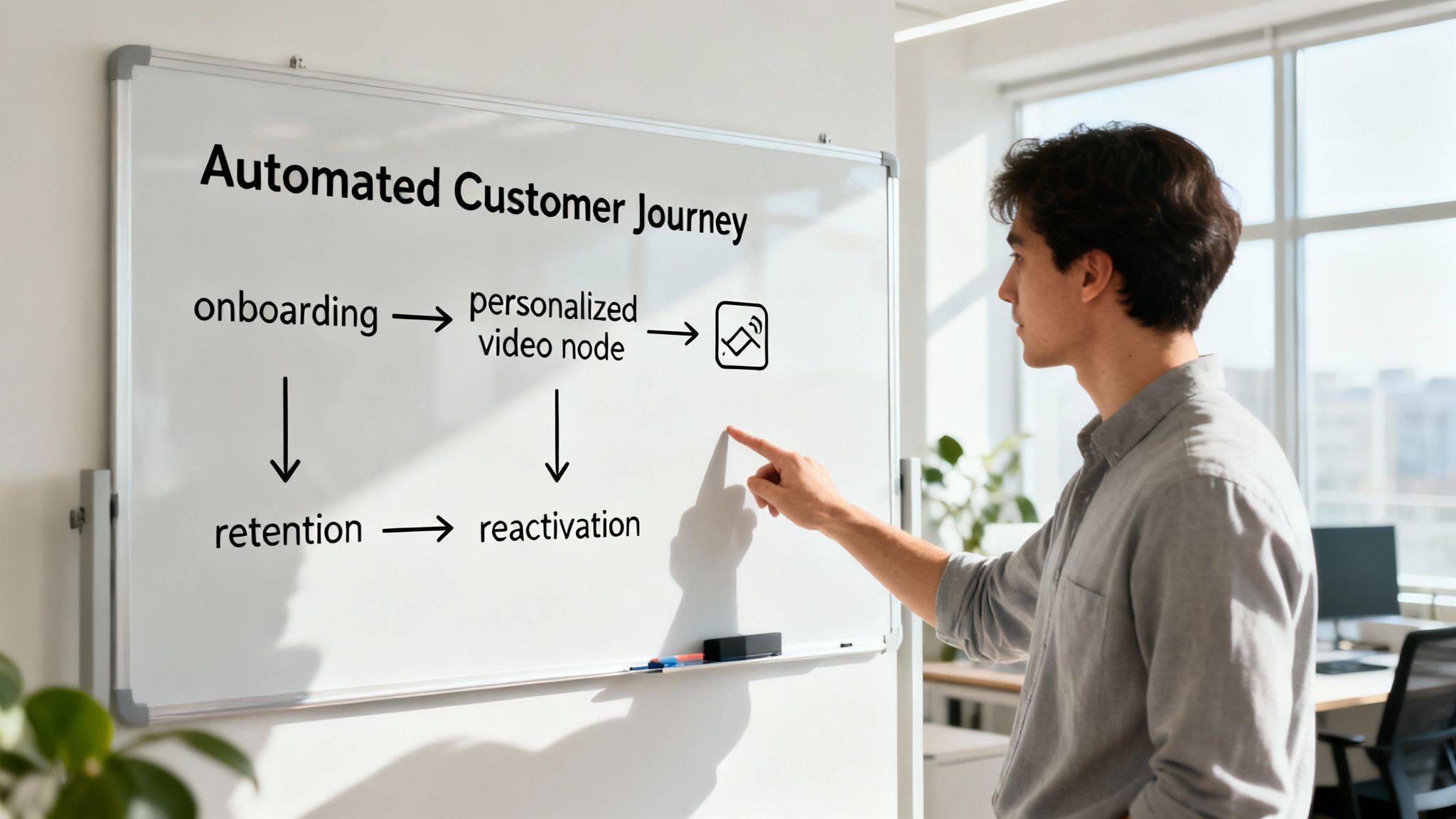
Personalized videos are a powerful start, but the real magic happens when you zoom out. Deep learning isn’t just about crafting better individual moments; it’s about architecting entire automated, hyper-personalized customer journeys from start to finish. This is how one-off videos evolve into a complete, story-driven experience for every single user.
Forget thinking in terms of rigid campaigns. Marketers can now build intelligent workflows that flex and adapt in real time. These systems use a constant flow of data to figure out what video a user needs next, whether the goal is to keep them engaged, cross-sell a new feature, or win them back.
From Data Points to Story Arcs
The whole thing is built on data—and not just basic demographics. We’re talking about rich behavioral data from your CRM and product analytics. A deep learning model can take these raw data points and weave them into a cohesive story for each customer.
Picture an onboarding sequence that isn’t a fixed set of three videos. Instead, the journey unfolds based on what the user actually does. If they spend a lot of time on one feature, the system automatically sends a quick video with advanced tips for that specific tool. If they ignore a key function, it triggers a friendly explainer video to show them what they’re missing.
This is the jump from a passive audience to an active participant, where the customer’s own actions directly shape the content they see next.
Designing Intelligent Video Workflows
Building these automated journeys means connecting data triggers directly to video creation. The system is always watching for those small user behaviors, turning them into perfect opportunities for meaningful communication.
Here’s a look at how these workflows actually function:
- Triggered by Micro-Behaviors: A user adds an item to their cart but doesn’t check out. A few hours later, a video lands in their inbox showcasing that product’s best features.
- Powered by Product Data: For a SaaS user, the system could generate a monthly “progress report” video, recapping their achievements and suggesting what to try next based on their usage.
- Driven by CRM Updates: When a customer’s status changes in the CRM—say, from a lead to a new client—it can instantly generate a personalized welcome video from their account manager’s AI avatar.
This isn’t just simple automation. It’s about creating a responsive ecosystem where the brand anticipates and meets customer needs with the right video, at the right time, every time.
Real-Time Adaptation for Every Goal
The best part about deep learning-powered journeys is how flexible they are. The same core system can be fine-tuned to hit different business goals, from keeping current customers happy to re-engaging those who have gone quiet.
Take a reactivation campaign, for example. Instead of a generic “We Miss You!” email, the system figures out why a user likely left by analyzing their past behavior. It then generates a video highlighting new features that are directly related to their previous interests, giving them a real reason to come back. You can learn more about setting up these kinds of targeted campaigns with our guide on video automation strategies.
This kind of intelligence is why the industry is booming. The global deep learning market is projected to skyrocket from USD 96.8 billion to an incredible USD 526.7 billion by 2030. This growth is fueled by more powerful computers and cloud technologies that make these advanced systems accessible to more businesses than ever. You can find more details on the growing deep learning market on grandviewresearch.com.
Brands adopting deep-learning-driven video creation are discovering an entirely new level of personalization. Tools like Wideo make it possible to generate AI avatar videos and automated customer journeys that scale without sacrificing human connection. It’s all about building better relationships, one automated, personalized video at a time.
Your Invitation to the Future of Creative Marketing
The shift is already happening. That line between what technology can do and what creative teams dream up is getting blurrier by the day, and deep learning is the reason why. We’ve moved past treating personalization as a simple tactic. Now, it’s the bedrock of every meaningful customer interaction. This isn’t about replacing human creativity; it’s about amplifying it to a scale that was once pure science fiction.
The future of marketing won’t be a choice between tech and human connection. It’s going to be about using one to create exponentially more of the other. Deep learning gives brands something truly special: scalable empathy. It’s the ability to understand and respond to individual needs in a way that feels genuinely personal.
Where Technology Meets Creativity
Try thinking of deep learning less as a scary algorithm and more as a new creative partner. It’s the team member who volunteers to do the heavy lifting—sifting through mountains of data, spotting patterns, and generating content. This frees up your team to focus on what they do best: the story, the strategy, and that irreplaceable human touch.
This is your chance to stop broadcasting to the masses and start having real conversations with individuals. Every workflow we’ve looked at, from AI avatar explainers to fully automated customer journeys, is built to make your brand’s voice more relevant, timely, and helpful.
The most powerful marketing doesn’t just sell a product; it solves a problem, offers guidance, or provides a moment of delight. Deep learning makes it possible to deliver that value to every single person, every single time.
Your First Step Forward
Getting started doesn’t mean you have to rip and replace your entire marketing stack overnight. The smartest way to begin is to start small. Pinpoint your single biggest personalization headache right now. Is it onboarding? Retention? Maybe customer education?
Start right there. Think about how a single automated, data-driven video could solve that one problem. Brands adopting deep-learning-driven video creation are discovering an entirely new level of personalization. Tools like Wideo make it possible to generate AI avatar videos and automated customer journeys that scale without sacrificing human connection.
This is your invitation to completely rethink what’s possible. The tools are here. The potential is immense. The only question left is: what will you create?
Related posts:
 A Guide to AI Video Creation for Beginners
 AI Avatars: The New Face of Business Communication
 AI Avatars: The Secret Weapon for Business Growth and Efficiency
 12 Powerful AI Tools for Video Creators in 2025
 Artificial Intelligence Is Now the Operating System for Modern Life
 Machine Learning Ends Generic Video Marketing