

AI automation is more than a productivity hack; it’s a fundamental shift in how businesses communicate. It empowers marketing, sales, and creative teams to deliver hyper-personalized video experiences at scale, finally moving beyond generic, one-size-fits-all campaigns.
This isn’t about just “saving time.” It’s about building an intelligent communication engine that connects with customers on a one-to-one level, automatically.
Reshaping the Marketing Funnel with Intelligent Video
Forget the rigid, linear marketing funnel. For years, we pushed leads down a predictable path, broadcasting the same message and hoping it would resonate. AI automation shatters that model, transforming the funnel into a dynamic, responsive ecosystem that adapts to every customer.

The critical change is moving from broadcasting at people to communicating with them. Instead of blasting the same explainer video to an entire email list, an AI-powered workflow can generate thousands of unique versions based on CRM data—all without manual intervention.
Imagine a funnel that learns and reacts in real-time. It takes static CRM data—a customer’s industry, past purchases, or engagement level—and instantly transforms it into a personalized video journey. That’s how you build genuine connections without adding complexity.
This capability is already unlocking powerful new strategies. Think of an e-commerce brand that automatically triggers an abandoned-cart video, featuring an AI avatar that mentions the exact items the customer left behind. Or a sales team that sends automated, personalized video summaries after every call, reinforcing key discussion points.
From Static Campaigns to Dynamic Conversations
This new paradigm is a massive leap forward. The broader industrial automation market growth reflects a huge appetite for systems that make hyper-personalization a scalable reality, not just a marketing buzzword.
It’s a move from isolated, manual tasks to an integrated, intelligent journey.
| Area of Focus | Traditional Approach (Manual & Siloed) | AI Automation Approach (Integrated & Scalable) |
|---|---|---|
| Video Production | One-off videos for broad audiences. Time-consuming and expensive to customize. | Intelligent templates generate thousands of unique video variations on the fly. |
| Customer Data | Data sits in a CRM, rarely used for dynamic creative. | CRM data (names, purchase history, etc.) automatically triggers personalized video content. |
| Engagement | Passive. A single video is sent out, hoping it resonates with some viewers. | Active. Videos adapt to user behavior, creating an interactive, two-way conversation. |
| Team Workflow | Marketing, sales, and creative teams work in separate bubbles, often with conflicting goals. | All teams use a unified platform, aligning messages and automating handoffs. |
| Scale | Limited by team bandwidth. Personalization is impossible beyond a handful of clients. | Unlimited. Deliver 1:1 experiences to thousands or even millions of customers. |
This isn’t just theory. The focus shifts from producing a single video to designing an intelligent template that can do the work of an entire creative department. The key is connecting data triggers with your creative assets. To fully grasp the potential, it’s essential to explore dedicated AI marketing automation strategies that can bring your entire funnel to life.
Here are a few real-world examples of what’s possible:
- Automated Onboarding: A SaaS company creates a video onboarding series that adapts based on which features a new user explores first.
- Dynamic Retention: An insurance brand automatically generates a “policy renewal” video for each client, breaking down their specific coverage and suggesting relevant options.
- Personalized Sales Outreach: AI avatars deliver messages that feel direct and personal, using CRM data to speak directly to a prospect’s specific pain points.
This is where marketing is headed. Every customer touchpoint becomes an opportunity for a meaningful, tailored conversation. By embracing AI automation, you can finally deliver the right video, to the right person, at the perfect moment. For a deeper look at making your videos connect on a one-to-one level, learn more about the power of personalized video in today’s market.
How AI Automation Supercharges Your Teams
Let’s break down what this automated journey actually looks like for marketing, sales, and creative teams. This is about completely rewiring how you communicate by plugging your data sources directly into a smart video platform.

The old way was to make one video and hope it connected. The new way? Design one intelligent template that can automatically generate thousands of unique, personalized videos on its own.
For Marketing Teams: From Generic Blasts to Personalized Journeys
Marketing departments are finally moving beyond generic email blasts and into the world of dynamic video nurturing. AI automation hooks directly into your marketing platform and CRM, using customer data as triggers to send incredibly specific videos. The goal is to deliver a message so relevant it feels like it was made just for them—because, in a way, it was.
- Triggered Abandoned-Cart Videos: An e-commerce brand automatically sends a video to a shopper who left items in their cart. The AI can pull in images of the exact products they were looking at and use a friendly AI avatar to say, “Hey [Customer Name], still thinking about the [Product Name]? Here’s a quick look at what you’re missing.”
- Segment-Specific Explainer Flows: An insurance company can ditch the one-size-fits-all policy explainer. Instead, it can generate unique videos for different policy types, automatically inserting clauses and benefits relevant only to that customer’s plan.
- Real-Time Content Adaptation: A viewer’s actions can literally change what they see next. If someone clicks on a link about “advanced features” in an onboarding video, the system can instantly follow up with another video that dives deeper into that specific topic.
For Sales Teams: High-Touch Outreach, Without the Grind
Sales has always been about building relationships, but that’s a tough process to scale. AI automation gives sales teams a superpower: the ability to maintain a personal touch with hundreds of prospects at once, without losing authenticity.
The core idea is simple but powerful: automate the follow-up, not the relationship. AI handles the repetitive touchpoints, freeing up sales reps to focus on strategic conversations and closing deals.
Picture these workflows running silently in the background:
- Post-Call AI Avatar Messages: A sales rep finishes a discovery call. Moments later, the prospect gets a personalized video from an AI avatar of that same rep. The video summarizes the key points from the call—pulled directly from the CRM notes—and ends with a clear call to action.
- Automated “Performance Recap” Videos: A B2B company sends clients weekly video reports. The system grabs performance data directly from the client’s account, drops it into a video template, and showcases their progress and wins. No manual editing needed.
For Creative Departments: From Producers to Strategists
Creative teams often get buried in the production grind, cranking out endless variations of the same content. AI automation gets them off the assembly line. It frees them up to think about high-level brand strategy and innovative ideas.
Instead of manually building dozens of social media clips, the creative team designs a single master template. The AI takes it from there. It can generate an entire social media calendar’s worth of content, creating unique videos for different platforms with messaging and visuals tailored to the audience data for each one.
This also unlocks a whole new level of reporting. Think fully automated “Year-in-Review” videos generated for every single client, pulling in their unique milestones, usage data, and success stories. It’s the kind of high-value, delightful content that was once impossible to produce for everyone.
Breaking the Content Creation Bottleneck
For years, the biggest roadblock to a scalable video strategy wasn’t budget or tech—it was the sheer effort of content creation. The creative process has always been a manual, resource-heavy bottleneck. AI automation doesn’t just speed this up; it completely rebuilds it from the ground up.

This goes way beyond simple editing tools. We’re talking about automating the entire creative pipeline, from the first idea to the final script. Creative teams are no longer stuck on a content assembly line; instead, they become strategic architects who design the systems that create the content for them.
The fundamental shift is moving from producing one-off assets to building intelligent, reusable templates. A single video template can become the foundation for thousands of unique, personalized variations, all triggered automatically by data.
From Blank Page to Polished Script, Instantly
One of the most time-consuming parts of video production is scripting. AI automation eliminates the blank-page problem by connecting your data directly to the story. Imagine your system generating context-aware scripts pulled straight from CRM notes, product briefs, or customer support tickets.
This means every message is not only personalized but also perfectly tuned to the customer’s current context.
- For Sales: An AI can scan notes from a recent discovery call and draft a follow-up video script that highlights the prospect’s specific pain points.
- For Marketing: A new product feature launches. Instead of writing a generic announcement, the AI can generate multiple script versions tailored to different user segments, emphasizing the benefits that matter most to each group.
The real power isn’t just speed; it’s relevance at scale. AI ensures that every piece of automated communication feels thoughtful and specific because it’s built on a foundation of real customer data.
This automated scripting is a core part of a modern creative workflow. It takes the raw information your business already has and spins it into a compelling story. To see this in action, check out how an AI video generator can transform simple text prompts into dynamic visual content.
Automating Your Entire Content Calendar
Beyond individual scripts, AI automation can tackle bigger strategic challenges, like planning your entire social media presence. The constant pressure to post fresh, engaging content is a huge drain on creative resources. Now, you can put that whole process on autopilot.
An intelligent system can analyze your brand guidelines, audience data, and performance metrics to automatically generate a complete social media calendar.
- Tailored Video Concepts: The AI proposes video ideas for each platform—short, snappy clips for TikTok, informative tutorials for YouTube, and polished showcases for LinkedIn.
- Platform-Specific Captions: It writes captions optimized for each network’s unique tone and algorithm, including relevant hashtags and calls to action.
- Strategic Scheduling: It even suggests the optimal times to post based on when your audience is most active, ensuring maximum visibility.
This frees your creative team to focus on what they do best: developing the big-picture brand vision. They design the master templates and set the strategic direction, while the AI handles the repetitive, tactical execution.
AI Video Automation in the Real World
Theory is great, but the real magic of AI automation happens when you see it in action. Let’s look at how businesses are using intelligent video workflows to achieve tangible results that were previously impossible at scale.
These aren’t far-off ideas; they’re practical applications changing how companies operate every day.
For the SaaS Company Delivering Data-Driven Value
Imagine you run an analytics company. Your team spends hours pulling together performance reports—static PDFs that most clients probably skim at best. With AI automation, you can reinvent this process.
- Automated Weekly Recaps: Every Monday, the system automatically pulls key performance indicators (KPIs) from each client’s account.
- Dynamic Video Generation: This data plugs directly into a video template, generating a personalized “performance recap” video for every customer.
- Personalized Narration: An AI voiceover brings the data to life: “Hi [Client Name], your user engagement increased by 15% this week, driven by the new feature you launched.”
Suddenly, you’re not just sending a report; you’re delivering an engaging touchpoint that proves your platform’s value, week after week.
For the Car Dealership Creating a Memorable Follow-Up
The first few hours after a test drive are critical. A standard email is easy to ignore. An AI-powered video, however, makes an impression.
Picture this: a customer test-drives a car, and the salesperson makes a quick note in the CRM. That single action kicks off an automated workflow.
Within minutes, the customer gets a video message from an AI avatar of the salesperson they just met. The avatar mentions the exact car—”Hope you enjoyed the ride in that beautiful blue [Car Model]”—and even highlights a key feature they discussed.
This is more than a follow-up. It’s a hyper-personalized experience that strengthens the connection while the salesperson is already helping the next customer.
For the Insurance Brand Simplifying Complexity
Insurance policies are dense. A thick welcome packet often creates more questions than it answers. An insurance brand can use AI automation to turn this critical onboarding moment into an opportunity to build trust.
When a new policy is issued, the system generates a unique explainer video just for that policyholder.
- The video breaks down their specific coverage, deductibles, and benefits in plain language.
- It visually points out the add-ons they chose, like rental car coverage or roadside assistance.
- The system uses different templates and scripts for different policy types, ensuring the information is always relevant.
This simple workflow transforms a confusing document into a clear, helpful welcome, building confidence from day one. These examples are just the tip of the iceberg. As the technology races forward, even more exciting applications are popping up. To get a glimpse of what’s next, it’s worth exploring the future of AI in screen recording, which hints at even more sophisticated automation possibilities.
The main takeaway is that AI video automation isn’t just about being more efficient. It’s about using data to build smarter, more personal relationships with your customers.
Your Guide to a Painless Implementation
Jumping into any new technology can feel like a huge leap, but adding AI automation to your workflow doesn’t have to be a headache. The secret? Start smart, focus on an immediate impact, and build from there. It’s about a strategic, step-by-step approach that makes the tech approachable and delivers quick wins.
The goal is a simple roadmap to sidestep the usual mistakes. Too many teams stumble because they try to automate everything at once or pick a project that’s too complex. A successful rollout always begins with one thing: identifying a single, high-impact pain point that AI can solve beautifully.
Start Small, Identify Your First Win
Before you overhaul your entire sales funnel, find one repetitive, time-consuming task that’s slowing your team down. A great place to start is a process that’s predictable and pulls from data you already have in your CRM. The perfect first project delivers obvious value without forcing you to rebuild your existing systems.
Here are a few high-impact areas for an initial project:
- Sales Follow-Ups: Automating the first follow-up video after a sales call can save your team hours daily while leaving a powerful impression on prospects.
- New Customer Onboarding: A simple, personalized welcome video can completely change the initial customer experience, setting the stage for long-term retention.
- Content Ideation: Is your team constantly stuck on what to post? Automating the creation of a content calendar can bring instant relief and strategic clarity.
The most common pitfall is over-automating critical human touchpoints too early. Instead of replacing a relationship-building conversation, use AI to automate the prep for that conversation or the follow-up after it happens.
By zeroing in on a single, well-defined problem, you can prove the value of AI automation fast. This builds confidence and creates a solid foundation for more ambitious projects.
Navigate Data Privacy and Brand Voice
Once you’ve picked your first project, ensure your data is clean and your brand voice is locked in. AI-generated content is only as good as the information you feed it. Clean, organized CRM data is crucial for creating videos that feel truly personal. It’s worth taking the time to make sure customer names, purchase histories, and other data points are accurate.
Just as important is keeping your brand’s personality intact. AI is a powerful tool, but it needs clear instructions. Create a set of brand guidelines specifically for your AI systems, covering everything from tone and language to visual style. The aim is for the AI-generated content to feel like a natural extension of your brand, not a generic, robotic message.
Avoiding Common Implementation Stumbles
Even with a great plan, there are a few common traps to watch out for. One of the biggest is failing to test and tweak your automated workflows. Launch your first project with a small audience segment, get feedback, and make adjustments before rolling it out to everyone. AI automation isn’t “set it and forget it”; it needs ongoing monitoring.
Another challenge can be internal roadblocks. Sometimes, the biggest hurdle isn’t the technology—it’s the team’s creative process. Scripting, for example, can become a major bottleneck if every video needs manual review. This is exactly where tools built for automation really shine.
Finding the Right Tools for Scalable Video
Connecting your strategy to the right technology is the final piece of the puzzle. The best AI automation platforms aren’t just standalone gadgets; they’re end-to-end solutions that plug into your existing CRM and data sources, turning big ideas into tangible results.
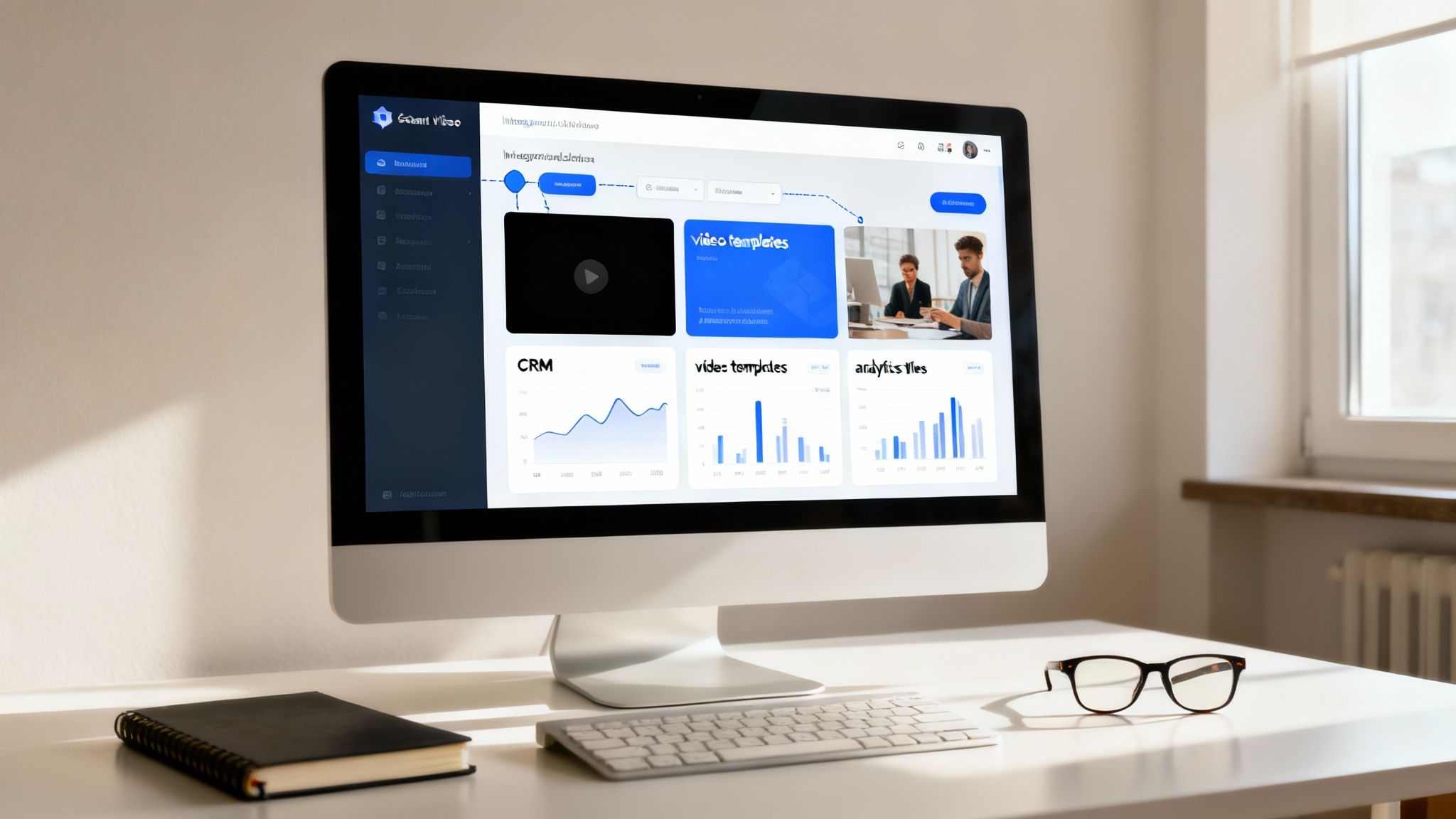
The trick is to find a unified system that brings everything together. This stops you from having to stitch together a complicated mess of different tools and lets your teams manage the entire workflow—from ideation to distribution—all in one place. Real scalability comes from integration.
From Futuristic Concepts to Everyday Reality
What once sounded like sci-fi is now a practical tool for your business. Today’s platforms are built to handle the exact workflows we’ve been discussing, turning raw data into powerful, personal communication without manual effort.
The right platform doesn’t just automate tasks; it automates outcomes. It transforms your data into dynamic video experiences that build relationships and drive action, all while your team focuses on strategy.
This means you can finally stop worrying about the old limits of video production and start exploring what’s possible when creativity is connected directly to your data. To see how you can make this a reality, explore the fundamentals of video automation and see how it works across different industries.
Here’s what this looks like with the right toolset:
- For Sales Teams: Personalized outreach gets a massive upgrade. A single rep can now send thousands of custom video messages that feel direct and personal, using CRM data to mention a prospect’s name, company, or a recent chat.
- For Customer Success: You can turn boring performance data into engaging, “Year-in-Review” style summaries for your clients. The system automatically pulls the metrics, visualizes their progress, and delivers a high-value touchpoint that proves your product’s impact.
Choosing a Platform for End-to-End Success
As you look at your options, prioritize platforms that offer a complete suite of AI-powered features. A system that can handle everything from content creation to delivery is the key to a smooth, efficient workflow.
For example, an integrated AI Script Generator (https://wideo.co/ai-script-generator/) can solve that initial “blank page” problem by turning simple data points into a compelling story. When you pair that with an AI Social Media Calendar Generator (https://wideo.co/ai-social-media-calendar-generator/), you can automate both the creation and strategic planning of your content. To bring your messages to life, explore how AI Avatars for business (https://wideo.co/the-future-of-business-ai-avatars-for-growth-and-efficiency/) can deliver personalized outreach at scale, while Automated Video Reports (https://wideo.co/video-report/) transform dry data into engaging narratives.
Got Questions About AI Automation? We’ve Got Answers.
Jumping into any new technology can feel like exploring uncharted territory. It’s natural to have questions. Let’s clear up some of the most common ones about bringing AI automation into your video world.
So, Does This Mean Our Creative Team is Obsolete?
Not a chance. Think of AI automation as a powerful assistant for your creative team, not a replacement. It’s brilliant at the heavy lifting—churning out thousands of personalized video variations or whipping up first-draft scripts from your CRM notes.
This frees up your human creatives to do what they do best: focus on the big picture, nail the brand story, and dream up the killer concepts that the AI then helps bring to life.
How Much of a Tech Genius Do I Need to Be to Use This?
Honestly, the barrier to entry is lower than you’d imagine. Modern AI platforms are built to be incredibly user-friendly, hiding complex code behind simple interfaces. If you can handle a standard marketing automation tool, you can manage an AI video automation platform.
Most of the setup is guided, and many features are as simple as filling out a form with your key messages. The focus is on your strategy, not on you becoming a programmer.
Can an AI-Generated Video Actually Feel Personal?
Absolutely, as long as it’s fueled by good data. Real, authentic personalization isn’t about tricking someone; it’s about being genuinely relevant. By pulling specific details you already know about your customers from your CRM—like their name, a recent purchase, or how they use your product—the AI builds a video that speaks directly to them.
The goal isn’t to fool the viewer into thinking a human handcrafted that single video. It’s to deliver a message so timely and specific that it creates a valuable, positive, and genuinely helpful experience for them.
Wideo offers a full suite of AI-powered tools designed to help you roll out a scalable, personalized video strategy without all the complexity. Start creating automated videos today.
Related posts:
 A Guide to AI Video Creation for Beginners
 AI Avatars: The New Face of Business Communication
 AI Avatars: The Secret Weapon for Business Growth and Efficiency
 12 Powerful AI Tools for Video Creators in 2025
 Artificial Intelligence Is Now the Operating System for Modern Life
 Machine Learning Ends Generic Video Marketing